Game-related ramblings.

Tag: Indie Time Page 4 of 5

Indie Time: You Have To Win The Game

I’ve been rather busy, and can only find time for shorter posts. Fortunately, a short post is perfect for You Have To Win the Game. Released for free just a couple of months ago by J. Kyle Pittman (who spends his days working for Gearbox), You Have To Win the Game is a clear homage to games of yore, complete with a 4-color palette and a cool effect that simulates the curved surface of an old cathode ray tube monitor. The gameplay is that of a traditional exploration platformer, with players guiding the protagonist through a variety of screens collecting items and dodging enemies. Fans of classic games from the 1980s will certainly get a nostalgic kick out of it.

But I think the appeal of You Have To Win the Game is wider than that. It manages to capture much of what made those old games interesting in a way that new players can appreciate. As I explored the caverns of You Have To Win the Game I felt the same sense of wonder I once felt when playing Another World, where there was no telling what each new screen would hold. Modern games, for all their advances, often fail to capture that feeling, which was so common in the early days. Later, as I began to get my bearings, I felt a particular satisfaction in discovering just how all the pieces of the world fit together. It wasn’t simply mapping out the environment, it was seeing the way all the parts formed a cohesive whole; the same thing greatly impressed me when I played Might and Magic: Book One. The game centers on this strong world design, requiring the player to pay close attention to the environment in order to work out how to win.

Sure, I’m an older player who certainly feels nostalgia for classic games, but I think that anyone could appreciate these aspects of You Have To Win the Game. If you’ve ever been interested in why so many people pine for the games of their youth, give You Have To Win the Game a try, and it might help you understand. You can download the game for free from the author’s site.
Indie Time: Iffermoon

A while back I posted about The Desolate Room, a game that never quite grabbed me. I’ve argued before that bad games can still be worth playing if they’re interesting enough, and there were in fact some interesting mechanics at the hart of The Desolate Room, but the game’s flaws outweighed these for me. I was left, however, with an interest in checking out the newer offerings from ScottGames, like the fairly recent sequel, The Desolate Hope. But rather than jump right to their most recent release, I decided to go through the ScottGames catalog in order, which meant starting with their next game, Iffermoon.

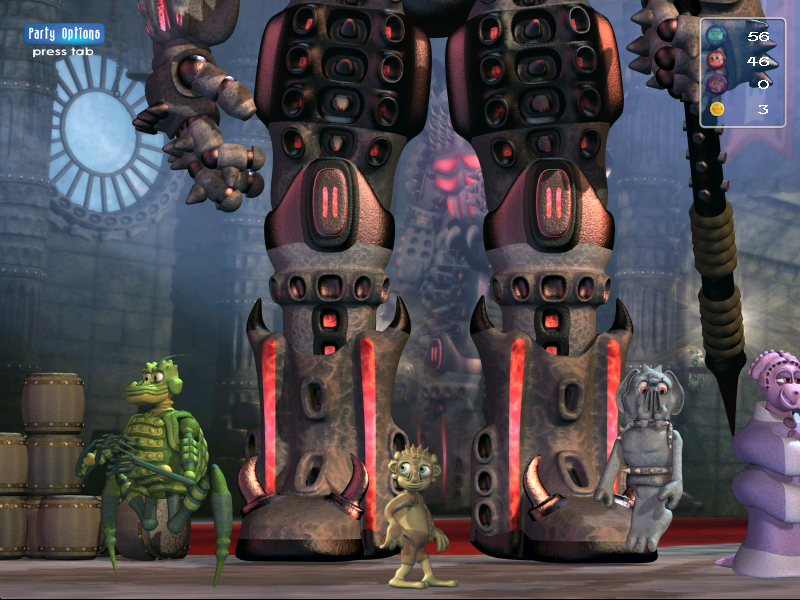
Iffermoon, like The Desolate Room, could be classified as a Japanese-style role-playing game due to its party-based, separate-screen battle system full of charge bars and special abilities. But that’s pretty much where the similarities end. Outside of combat, the player guides Silence, the young protagonist, through the various locales of the planet of Dinostria in side-scrolling fashion, stopping to chat with the diverse inhabitants and collecting various items along the way. There’s no real platforming; the side-view is merely the method for traveling around, and acts as a showcase for the strikingly imaginative and beautiful locations as well as some really fantastic character designs for the people you will meet. These, as well as the rather unorthodox story, were the main draws for me.

Indie Time: Chain of Retribution (part 2)

This is my second post about the “chain game” Chain of Retribution, which was developed by seven people in succession, each passing on their work to the next. If you haven’t done so already, you should probably read part one here.

The mystery is gone. I had been working my way through Chain of Retribution trying to guess where the changeovers were, to see if I could detect the influence of a new author or if it would fit so seamlessly that I couldn’t tell. But then, as I approached the game’s finale, I stumbled upon a room where all was revealed, where the authors speak directly to the player about their roles in the project. Given that trying to suss out each person’s involvement was my favorite part of the game, I don’t want to spoil the reveal here, but I can say that there were indeed some changeover points that I completely missed while playing. Sadly, though, this meant I had to face the endgame already knowing who had been involved in making it. But I was pleasantly surprised at how enjoyable it was.

Indie Time: Chain of Retribution (part 1)

I first read about Chain of Retribution over at IndieRPGs, and at first it looked like a fairly standard Japanese-style role-playing game made using RPGMaker. But what caught my attention is that it is apparently a “chain game”, meaning that one developer worked on it and then passed it on to another, who continued working on it, before passing it on again, and so forth. Apparently a total of seven people worked on the game in succession to create the final product.

This intrigued me. How would it work? Did the developers plan everything out beforehand? Or did each one write the next part of the story themselves? Would the game veer off in a completely different direction than the first developer intended? Was there any collaboration on gameplay systems and graphics, or was that all set up by the first person in line? The web page for the game doesn’t answer any of these questions, so I decided to try the game and see for myself.

Indie Time: Poacher

Most people know Ben “Yahtzee” Croshaw for his fast-talking, foulmouthed and often hilarious Zero Punctuation video reviews of various games, but he’s also made a few games of his own. Long before starting Zero Punctuation he made several point and click adventure games with Adventure Game Studio, the most famous of which comprise the four-game John DeFoe series (aka the Chzo Mythos series), beginning with 5 Days a Stranger. He even managed to create a few platformers with Adventure Game Studio, including Trilby: The Art of Theft, a stealth platformer with a different style to Stealth Bastard that’s well worth checking out. Like the rest of his games, it’s available for free.

Lately, Yahtzee’s efforts have been focused on Zero Punctuation and writing a novel, but he did find time to make Poacher, an exploration platformer starring “unflappable Yorkshireman” Derek Badger. Indeed, Yahtzee was apparently inspired by a google image search result for “Yorkshireman” (a result I was sadly unable to reproduce, but then I am in a different country). Being a fan of exploration platformers and of Yahtzee’s earlier work, I decided to check it out.

Indie Time: Treasure Adventure Game

I decided to try Treasure Adventure Game after it suddenly showed up for free in my GOG.com account. But don’t worry if you don’t have a GOG account — you can grab it for free directly from the creator as well.

Billed as a retro-styled exploration-based platformer in the vein of classics like Super Metroid, Treasure Adventure Game certainly contains a lot of old-school design elements that might put off some players. There’s a lot of backtracking… seriously, a lot of it. There is a system for fast-travel but it’s not introduced until late in the game and is not very obvious; I didn’t even find out about it until after I finished the whole thing. There are many jumping puzzles where the player can fall and lose significant progress, leading to frustration after missing the last jump in a long sequence. Saving is only possible at special save points, meaning more lost progress after dying. But despite all of this I found I was enjoying myself immensely.

Indie Time: Stealth Bastard

I’ve been meaning to play Curve Studios’ Explodemon! ever since it was ported to PC, but I haven’t gotten to it yet. I did, however, find time to play their more recent Stealth Bastard, which has the advantage of being completely free. With the tagline “Tactical Espionage Arsehole”, Stealth Bastard asks the question, “why do stealth games have to be so… slow?”

Why, indeed.

Indie Time: To the Moon

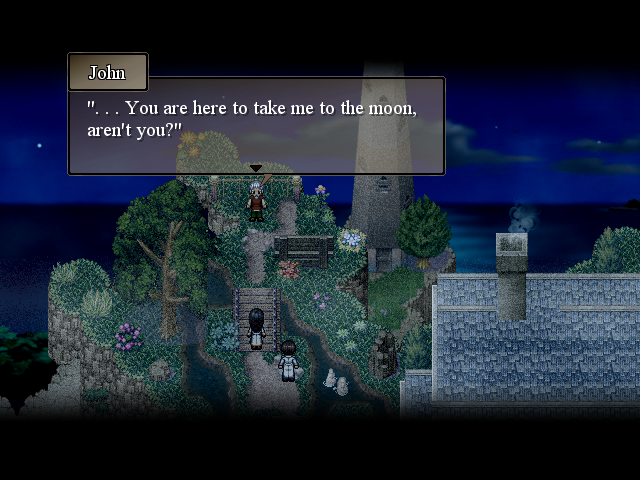
To the Moon first got headlines because it features some music by Laura Shigihara, famous for writing and performing the Plants vs. Zombies theme song. But then it kept getting headlines, on its own merits, and by all accounts is not only excellent but also fascinating. I’ve been looking forward to playing it for a while.

The premise of the game is simple. At some point not far in the future, the technology exists to alter a person’s memories, essentially rewriting their lives. Since this process is so disruptive, it is reserved for people on their deathbeds, to help them realize their final desires. In the game, the player follows two doctors from the Sigmund Agency of Life Generation, as they enter a dying man’s memories and attempt to fulfill his last wish: to go to the moon.

Not Indie Time: From Dust

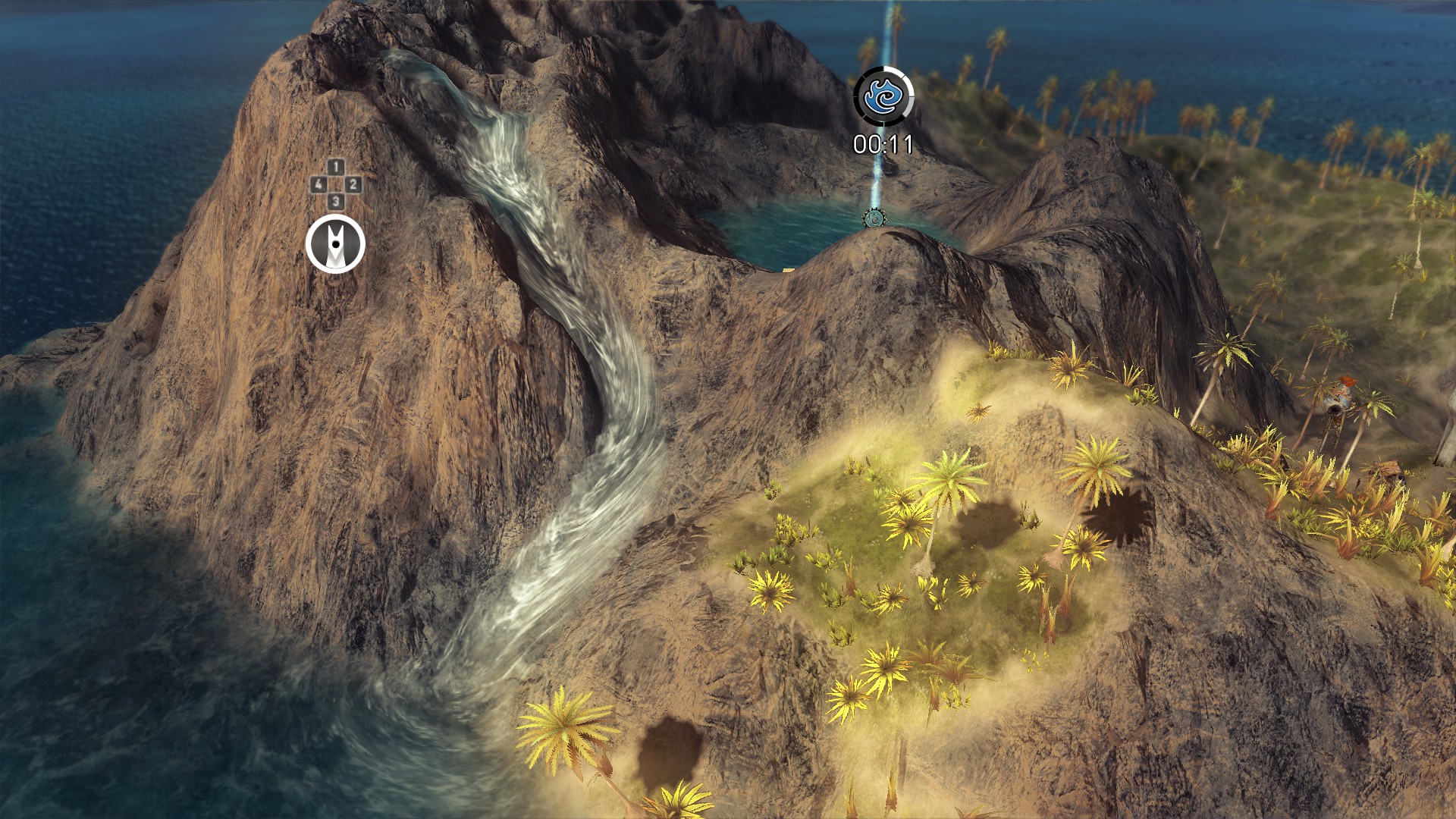
The next game on my list, From Dust, is not an indie game. It is published by Ubisoft, one of the largest game publishers. But it is made by Eric Chahi, the same man who made the striking Another World, and marks his first game since 1998. And its premise sounds like something that only an indie studio would attempt: a game centered around deformable terrain, with realistic water and lava physics, that sees the player morphing the landscape in order to guide tiny tribal villagers to safety. Re-routing rivers, stemming lava flows by building mounds of earth, and more, all made possible by the terrain-deforming tech.

Unfortunately, Ubisoft’s involvement caused a lot of outcry when From Dust was released for PC, several weeks after its Xbox debut. After Ubisfot stated that the game would not feature their infamous form of DRM (that’s “digital rights management”, a new term that really just means copy protection) that requires players to be online at all times and will kick them out of the game if their connection is interrupted, From Dust launched on Steam and did indeed feature said DRM. Disgruntled customers complained loudly, and Steam even issued refunds, which is almost unheard of. Eventually the DRM was removed with a patch, and I was able to purchase the game and try it out.

Indie Time: VVVVVV

The next indie game on my list is VVVVVV, even though I’ve played it already. But it has since been updated to v2.0, including a bunch of bonus levels made by various other indie game developers, so I decided it was time to play through it again. Besides, it’s excellent, and only takes a few hours to play through, so why not?

If you have not yet played VVVVVV, you’re probably looking at that screenshot and thinking it looks like a game from 1980, rather than 2010. The retro look is intentional, and in motion it looks a lot better than you might expect. The animations are smooth and lend a modern sheen to the visuals that suggests games of old rather than outright emulating them. The visuals also set a certain tone that fits the gameplay perfectly.

And the gameplay itself is the best part of VVVVVV. There are only three buttons — move left, move right, and flip gravity — but designer Terry Cavanagh uses these simple mechanics to absolutely brilliant effect over the course of the game.

Page 4 of 5

Powered by WordPress & Theme by Anders Norén