Game-related ramblings.

Tag: History Lessons Page 4 of 9

Console History: Dragon Slayer IV: Drasle Family (AKA Legacy Of The Wizard)

This is Console History, a special sub-series of my more general History Lessons series, covering console role-playing games, action role-playing games, Metroidvanias, and action-adventure games in nominally chronological order starting in the late 1980s. The chronology is garbled in the beginning as the scope of the series expanded, but it gets more organized later on. As always, you may click on images to view larger versions.

I wasn’t planning to cover any of Nihon Falcom’s Dragon Slayer games for this series. The first Dragon Slayer appeared way back in 1984 for the Japanese PC-88 home computer (and, later, other home computers like the PC-98 and FM-7), where it pioneered an action role-playing design in which players explore top-down screens in real time, bumping into enemies to fight them. This design was hugely influential, inspiring the Hydlide series (I covered the third game as part of this blog series) as well Nihon Falcom’s own Ys series (I covered the first two games) and Nintendo’s The Legend of Zelda, which added innovations that arguably spawned a whole new genre. But Dragon Slayer itself sounded quite simple in comparison to these later titles, as well as potentially frustrating due to high difficulty or unclear objectives. And, of course, most of the Dragon Slayer games were never translated into English. So, early on in my planning sessions I decided to exclude them.

Then I read more about some of the later Dragon Slayer games that were eventually localized in English, which sounded much more interesting than I expected. So, I’m breaking from my timeline once again to go back and play a couple of them. The first is Dragon Slayer IV: Drasle Family (that stands for DRAgon SLEyer Family, of course), originally released in July 1987 for the MSX and MSX2 home computer systems, and later ported to Nintendo’s Famicom (for this blog series, it comes after Wonder Boy In Monster Land and before Cleopatra no Mahou in the timeline). Since American players had never seen any of the Dragon Slayer games before, it was renamed Legacy of the Wizard for its official US release on the NES about two years later. It keeps the single-square-sized characters and blocks from the original Dragon Slayer, but reimagines the labyrinthine dungeon as a huge side-scrolling platformer world, in which ledges, pits, ladders, and doors intertwine to create different paths. Players then choose from (and switch between) five playable family members, each with different abilities and usable items, so the entire game becomes a puzzle the family must solve together. Following on from Metroid, which had released about a year earlier, Dragon Slayer IV helped define what would become known as the Metroidvania genre. It sounded fascinating, and I decided I had to try it.

Console History: SpellCaster

This is Console History, a special sub-series of my more general History Lessons series, covering console role-playing games, action role-playing games, Metroidvanias, and action-adventure games in nominally chronological order starting in the late 1980s. The chronology is garbled in the beginning as the scope of the series expanded, but it gets more organized later on. As always, you may click on images to view larger versions.

A month or so after the original Japanese release of Exile, subject of the last entry in this series, SpellCaster released in Japan, although it would take another year for the US version to appear. Developed in-house by Sega for their Master System console, SpellCaster isn’t really a role-playing game, but it sounded interesting enough that I wanted to play it anyway. Besides, I covered Metroid and Lord of the Sword in this series, and they’re not really role-playing games either. What intrigued me about SpellCaster is its combination of side-scrolling action platformer sections and first-person, menu-based adventure game sections. That sounded like such an odd mix that I just had to try it.

Console History: Exile

This is Console History, a special sub-series of my more general History Lessons series, covering console role-playing games, action role-playing games, Metroidvanias, and action-adventure games in nominally chronological order starting in the late 1980s. The chronology is garbled in the beginning as the scope of the series expanded, but it gets more organized later on. As always, you may click on images to view larger versions.

After a brief step back in time to cover Castlevania II: Simon’s Quest, we are back on track with our timeline for this series. Sort of. Exile is technically a remake of a game called XZR II by Telenet Japan which released for Japanese home computer systems in August 1988, about two months after Lord of the Sword, but the remake (which is the only version localized in English) arrived three years later in 1991, for both the Sega Genesis and the PC Engine CD/Turbografx-CD. Having been impressed by the Turbografx-CD hardware when playing Ys I & II for this series, I opted for that version of Exile.

Console History: Castlevania II: Simon’s Quest

This is Console History, a special sub-series of my more general History Lessons series, covering console role-playing games, action role-playing games, Metroidvanias, and action-adventure games in nominally chronological order starting in the late 1980s. The chronology is garbled in the beginning as the scope of the series expanded, but it gets more organized later on. As always, you may click on images to view larger versions.

When I wrote about Ys II: Ancient Ys Vanished – The Final Chapter, I celebrated finally getting my timeline in order for this series. I had started haphazardly, playing things and then realizing I should add other games that had come before, resulting in awkward jumps back and forth in time. With that post, however, I had finally finished playing catch up, and everything should have been in nice chronological order moving forward. But it only took one more post — about Sega’s Master System game Lord of the Sword — to make me realize I had to jump back in time again. Lord of the Sword’s design, which is basically an action platformer game but set in an open world inspired by role-playing games, reminded me of Castlevania II: Simon’s Quest, a game I really should have covered already. I wrote about Metroid, after all, and Simon’s Quest is the game that added the “vania” to Metroid to create the “metroidvania” genre.

Console History: Lord Of The Sword

This is Console History, a special sub-series of my more general History Lessons series, covering console role-playing games, action role-playing games, Metroidvanias, and action-adventure games in nominally chronological order starting in the late 1980s. The chronology is garbled in the beginning as the scope of the series expanded, but it gets more organized later on. As always, you may click on images to view larger versions.

I’d never heard of Lord of the Sword before doing research for this series. Released on June 2, 1988, a little over a month after our last entry Ys II: Ancient Ys Vanished – The Final Chapter, Lord of the Sword was allegedly inspired by Wonder Boy In Monster Land, the arcade platformer with role-playing elements that released a year earlier. That game was a pleasant surprise when I played its Master System port for this series, so I was intrigued going in to Lord of the Sword.

Console History: Ys II: Ancient Ys Vanished – The Final Chapter

This is Console History, a special sub-series of my more general History Lessons series, covering console role-playing games, action role-playing games, Metroidvanias, and action-adventure games in nominally chronological order starting in the late 1980s. The chronology is garbled in the beginning as the scope of the series expanded, but it gets more organized later on. As always, you may click on images to view larger versions.

When I first started writing about early console games, I was only planning to play through the Final Fantasy series. Then I decided I should probably go back and play the Dragon Quest series too. Then I decided I should also play a bunch of other role-playing games, and then that I should add some action role-playing games… the result was something of a mess in terms of the timeline, jumping back and forth as I kept expanding my list of games. This post, however, brings my (now massive) list back into order. My last post was about Hydlide 3: The Space Memories, which originally released on November 22, 1987. The original Final Fantasy (the very first post I wrote in this console history series) appeared about a month later, on December 18, 1987. A mere two days after that, the excellent Phantasy Star released. Next came Dragon Quest III on February 10, 1988. And, finally, that brings us to Ys II: Ancient Ys Vanished – The Final Chapter, originally released in Japan on April 22, 1988 for Japanese home computer systems like the PC-88. From here on out, we should be going in chronological order!

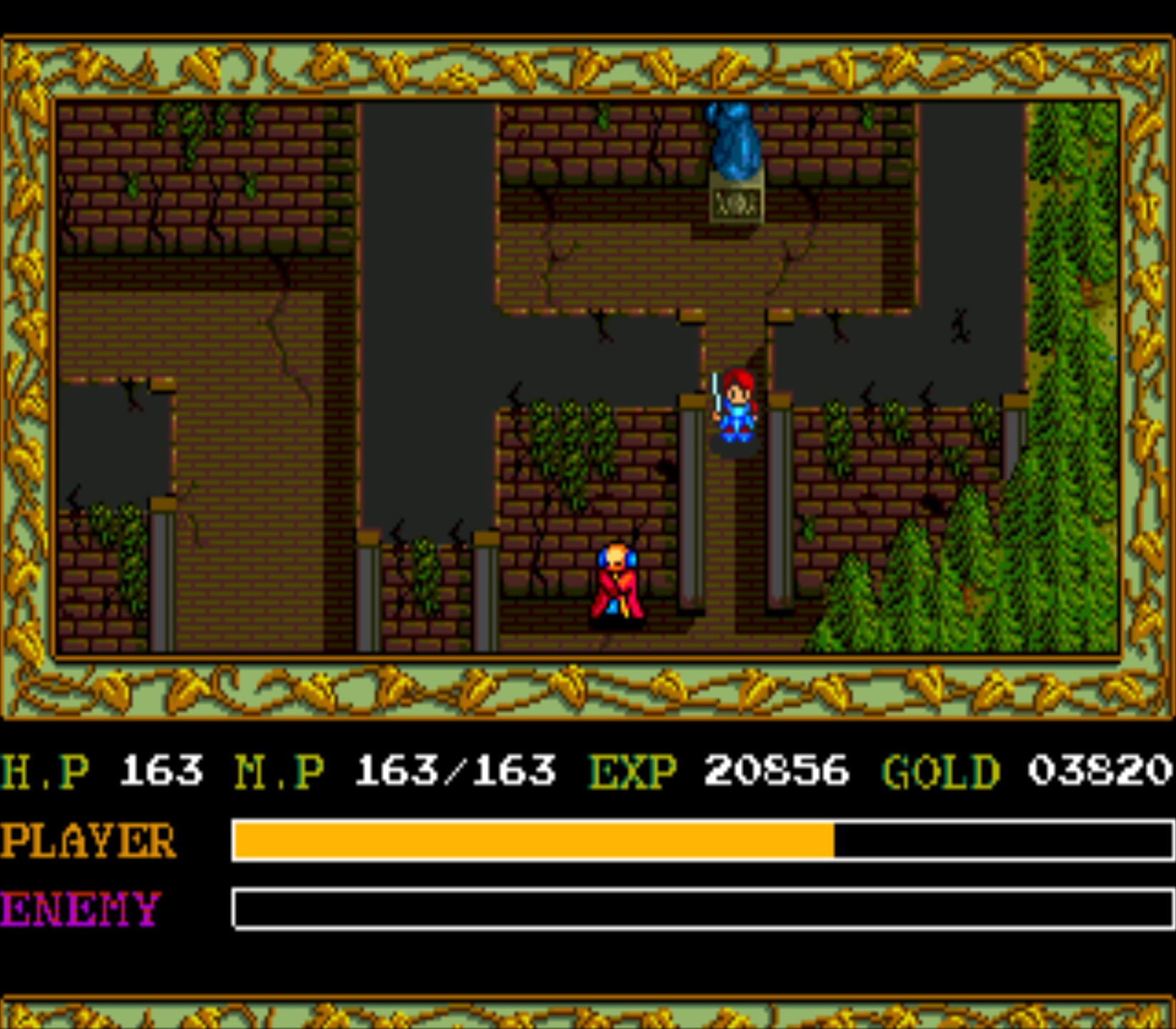
As the name suggests, Ys II is a direct sequel to the original Ys that finishes up the story. The connection is so strong, in fact, that both games were later remade and re-released as a single title, Ys Book I & II, for the PC Engine CD/TurboGrafx-CD in December 1989. That’s the version I played, and I’ve already written about Ys I. I then paused my playthrough to cover other games that released between Ys I and Ys II. Now, I’ve gone back to finish off Ys II.

A Backlog Roulette And History Lessons Double Whammy: The Secret Of Monkey Island: Special Edition

This is Backlog Roulette, a series in which I randomly pick an unplayed game from my backlog and play it. This particular entry is also part of the History Lessons series. As always, you may click on images to view larger versions.

About a year ago, I picked an unplayed game at random from my terrifyingly organized spreadsheet containing all the games I own. The random number generators selected Wild Metal Country, an oddity from 1999 that I found surprisingly calming for a game about tank battles. Now, I decided to roll the digital dice again, officially making Backlog Roulette a series of sorts. But this time the dice popped up a far more recognizable game: The Secret of Monkey Island: Special Edition. I acquired this some time ago, intending to write a History Lessons post about it eventually, so… here it is.

Console History: Hydlide 3: The Space Memories (AKA Super Hydlide)

This is Console History, a special sub-series of my more general History Lessons series, covering console role-playing games, action role-playing games, Metroidvanias, and action-adventure games in nominally chronological order starting in the late 1980s. The chronology is garbled in the beginning as the scope of the series expanded, but it gets more organized later on. As always, you may click on images to view larger versions.

I decided to skip the first Hydlide game for this series. Originally released in 1984 by T&E Soft for the PC-88 and quickly ported to other Japanese home computer systems, it predates even Dragon Quest, and, along with its competitor Dragon Slayer, it established the template for action role-playing games in Japan. There, it’s considered a hugely influential classic: its system of running into enemies to fight them would be used again in Ys I: Ancient Ys Vanished, while The Legend of Zelda stripped away some role-playing elements but expanded the action by including a dedicated attack button and items like the boomerang and bow and arrows that add tactical options. But Hydlide would not reach American audiences until 1989, after The Legend of Zelda, and by that point it just seemed simplistic and boring in comparison. I know, because I actually owned it as a kid.

Hydlide II: Shine of Darkness never made it out of Japan, and from what I’ve read is pretty similar to the first game. Hydlide 3: The Space Memories, however, did eventually get released in North America and Europe. The Japanese version appeared in 1987 (hence it showing up now in my timeline for this series) for home computer systems, but it was ported to the Sega Mega Drive/Genesis a few years later, including a US release in 1990 and a European release in 1991, both using the name Super Hydlide. Even so, I’d never heard of it. But it sounded intriguing when I read about it now: in addition to adding a dedicated attack button like The Legend of Zelda, it features a morality system based on whether the player attacks “good” vs. “evil” monsters, a 24-hour in-game clock requiring the hero to rest at night and eat two meals a day, and all items (including money!) have weight, so players must choose what to carry lest they be overloaded. These mechanics all sounded like those found in Western computer role-playing games, rather than the Japanese style that was more common on consoles. Perhaps that makes sense, given the game was originally a home computer game in Japan, but I was still intrigued. And then there’s that subtitle, which implies a science fiction element, reacalling some of my favorite classic role-playing games. And, since the North American release was on the Sega Genesis, it marks the first game in this series on a fully 16-bit console (the Turbografx-16 doesn’t quite count, even though it’s in the same generation).

Console History: Cleopatra No Mahou (The Cursed Treasure Of Cleopatra)

This is Console History, a special sub-series of my more general History Lessons series, covering console role-playing games, action role-playing games, Metroidvanias, and action-adventure games in nominally chronological order starting in the late 1980s. The chronology is garbled in the beginning as the scope of the series expanded, but it gets more organized later on. As always, you may click on images to view larger versions.

When I started this series about console game history, the first game I wrote about was Final Fantasy. That was before I got more organized and realized there were older games I wanted to cover as well. Games like Cleopatra no Mahou (which translates roughly to “The Cursed Treasure of Cleopatra”), the first role-playing game that Square made, before getting their breakout hit with Final Fantasy. The story goes that the “Final” in Final Fantasy referred to the fact that it may well have been Square’s final game, although that may not be wholly accurate. But Square were in financial trouble at the time, because their earlier games hadn’t sold well. I wanted to play Cleopatra no Mahou not only to see what Square’s early foray into the role-playing genre was like, but also because I was intrigued by its modern day Egyptian setting and blending of role-playing design with adventure game elements.

Console History: Wonder Boy In Monster Land

This is Console History, a special sub-series of my more general History Lessons series, covering console role-playing games, action role-playing games, Metroidvanias, and action-adventure games in nominally chronological order starting in the late 1980s. The chronology is garbled in the beginning as the scope of the series expanded, but it gets more organized later on. As always, you may click on images to view larger versions.

When I wrote about Zelda II: The Adventure of Link, I mentioned that it inspired many other console games to combine platforming action with role-playing elements. I hadn’t expected it to inspire arcade games to do the same, but that’s exactly what happened with Wonder Boy In Monster Land. The original Wonder Boy from 1986 (which I did not play for this series) was a straight arcade platformer, a design which works well as a coin-operated game. There are discrete levels of increasing difficulty played one after another, and players must start over from the beginning if titular protagonist Wonder Boy perishes. Learn the levels after depositing enough coins for several attempts, and maybe players could make it to the end, or at least reach the high score list.

Role-playing games, on the other hand, tend to be longer adventures that last for many play sessions, with characters gradually growing in strength and abilities along the way. That’s not typically a good match for the short form, repetitive nature of arcade games. Yet it seems to have worked in the case of Wonder Boy In Monster Land. Its Sega Master System port is fondly remembered as one of the better games for that console, and its sequel Wonder Boy III: The Dragon’s Trap earned such a cult following that it saw a full remake in 2016, followed by an entirely new spiritual successor in 2018. Curious about the enduring appeal of this series, I decided to play the Master System version of Wonder Boy In Monster Land, developed by Sega and released in January 1988, about six months after Westone Bit Entertainment’s original arcade release in July 1987.

Page 4 of 9

Powered by WordPress & Theme by Anders Norén