Game-related ramblings.

Category: Uncategorized Page 43 of 61

History Lessons: Shadowgrounds

New readers may wish to read my History Lessons Introduction first. Other History Lessons posts can be found here. And, as always, you can click on images to view larger versions.

Finnish developers Frozenbyte are best known for the Trine series, the first entry of which I wrote about back in 2012. But their first game was the top-down science fiction shooter Shadowgrounds, released in 2005. It’s interesting because it’s a quality yet clearly lower budget title that appeared just before indie games really started to take off. As such it’s somewhere between the games that the major studios make and the games that we now associate with indie developers. Such a game could not have been made in the United States at that time; customers expected big expensive games, and digital distribution — which would soon make it feasible for small development teams to reach a wide audience — was only just getting established.

The Name Game: Better Metal Gear

You can read other Name Game posts here.

I was planning to write about some different games, but then Caves of Qud happened. And then I kept playing it even after I posted about it. I was going to write more about it but then realized that I already wrote everything I wanted to write in either my first post or my more recent post, so that’s out.

Instead, I have to write about a game I haven’t played. Metal Gear Solid V: The Phantom Pain released recently, and apparently it’s pretty great. Unfortunately, I’m crazy and can’t play any game without playing all the previous entries in the series first, even when it’s not necessary and probably a dumb idea. It also may be impossible in the case of Metal Gear Solid since I don’t own any consoles. I’ve only ever seen other people play parts of the Metal Gear Solid games, so I’d have to start from the beginning, which would take a long time even if I can find ways to play them all on my PC.

In the meantime, however, I can provide a a few naming suggestions. Read on.

Roguelike Updates: Caves Of Qud Goes Commercial

Readers unfamiliar with roguelikes may wish to read my introduction to the genre, and possibly peruse some of my Roguelike Highlights posts. And maybe read about why we might want to start calling them deathcrawls instead. Also, as always, you can click on images to view larger versions.

Long-time readers will remember that I quite liked Caves of Qud when I played the original freeware release back in 2013. I also lamented that it hadn’t seen any updates in a while. Well, developers Freehold Games have resumed work on Caves of Qud, releasing it on Steam Early Access with regular updates. They also must remember that I enjoyed the freeware version, because they sent me a copy of the Early Access version for free. Sweet!

While there are a lot of updates, the core experience of the game is largely the same, so if you are unfamiliar, I direct you towards my earlier post about it, which describes what it is (a very-far-future roguelike about searching for ancient science-fiction technology) and why it’s great. Here I will focus on what’s new, and what I hope to see in the future.

The Name Game: Rebranding The Roguelike

As always, you can click on images to view larger versions.

What’s this? A Name Game post that’s actually serious? Indeed it is, but never fear, the Name Game will return to making fun of silly game names soon enough. Right now, however, the Name Game’s name-related talents are needed for something near and dear to this blog’s heart. I am speaking, of course, of the roguelike.

(If you are unfamiliar with roguelikes, you should read my introduction to the genre, and perhaps a few of the roguelike highlights that have appeared on this blog)

I recently read an interesting article (although the article itself is not recent!) arguing that the term “roguelike” is a rather poor one. It takes a genre of games and describes it entirely by its similarity to an earlier game, which is restrictive and often, to varying degrees, inaccurate. I find I agree with this reasoning, especially in light of the new and popular crop of games which borrow design elements from traditional roguelikes and expand them into new and interesting areas. I’ve used the term roguelike-like here on this blog mostly because I think it’s funny, but the reason it’s funny is it emphasizes the inherent absurdity of the original roguelike term.

Perhaps a new name is needed, then. Well, here at the Name Game, names are literally our game. We’ve got this.

In Space, No One Can Hear Your Roguelike Updates

Readers unfamiliar with roguelikes may wish to read my introduction to the genre, and possibly peruse some of my Roguelike Highlights posts. Also, as always, you can click on images to view larger versions.

Well, it’s been another long delay between Roguelike Updates posts, largely because I haven’t had much time to play roguelikes recently. But I do want to highlight a couple of big updates. First, Approaching Infinity has been at version 1.1 for a while, with another update imminent. Second, Dungeon Crawl Stone Soup forever marches forward, now on version 0.16.1. I’ve had a chance to play both, and offer some quick thoughts below.

Broken Age Is Finished And I Like It A Lot

I wrote about Act 1 of Broken Age nearly a year and a half ago. The full game was released back in April, and I went back and played through the whole thing, ready to provide my final thoughts. Initially I thought I would write about the entire, complete game, ignoring the fact that it had been split into two acts (a decision the design team made out of necessity rather than desire) and judging it on its own merits. But, after a few aborted attempts to do so, I realized that I couldn’t do it. I can no longer view Broken Age merely as a game, a fate I now believe was inevitable the moment Tim Schafer decided to make its development public, both by funding it through Kickstarter and by chronicling the process in documentary form. So I decided to write about all of that too.

History Lessons: Max Payne

New readers may wish to read my History Lessons Introduction first. Other History Lessons posts can be found here. And, as always, you can click on images to view larger versions.

Max Payne, released in 2001 by Remedy Entertainment (known these days for the Alan Wake games), was the first game to do a lot of things. Ever play a game where time slows down in the middle of the action, letting you carefully aim and fire your guns in slow motion? Max Payne was the first game to do that. In order for that to be possible, Max Payne needed to model individual bullets fired from guns, tracking their flight paths and having them realistically impact against walls, furniture, and people. Today every game that features guns does that, but Max Payne was the first; in earlier games, guns would magically damage enemies in their sights without any projectiles being used whatsoever. At the time it sounded impossible: individual bullets? No way. And you can dive sideways in slow motion, firing a pistol in each hand, while these bullets whiz past? Just like in the action movies? No. Way.

Today, games get a lot of criticism for trying to ape cinema so much, for being filled with non-playable cutscenes, countless set pieces, and other scripted events, but when Max Payne was released it wasn’t nearly so common, and it wasn’t a cause for criticism. In fact, it was cause for excitement. To be able to actually play a crazy action scene from a film was like a dream, something that the limited capabilities of older computers and software could never have enabled. Max Payne was not the first game to try to capture the feeling of playing a movie — the first game I played that tried this was Half-Life — but it is one of the most notable. I’d seen some people play sections of Max Payne, and it sure looked like it delivered. But I’d never played it myself until now.

Space Waddle: Lifeless Planet

As always, you can click on images to view larger versions.

After spending some time with games without stories, I needed something to ease my way back into story-heavy games. I ended up selecting another title from my backlog, one that is much more like what I thought In Ruins would be: a game about wandering through a beautiful landscape, with a story that is mostly told rather than played. The game, of course, is Lifeless Planet by Stage 2 Studios. I didn’t use a hyperlink there because the game’s homepage actually contains spoilers for the game, which is unfortunate. So be warned before you click on the following link to the game’s page.

Lifeless Planet is a game about an little astronaut who lumbers around the gorgeous vistas of the titular planet with a pleasing low-gravity space waddle. As he explores, of course, spoilers happen. I will endeavor not to spoil anything about the game’s story here, because the surprises it offers are a huge part of the game’s appeal, but I will discuss how that story is told, along with all the other things the game does well.

Games Without Stories

As always, you can click on images to see larger versions.

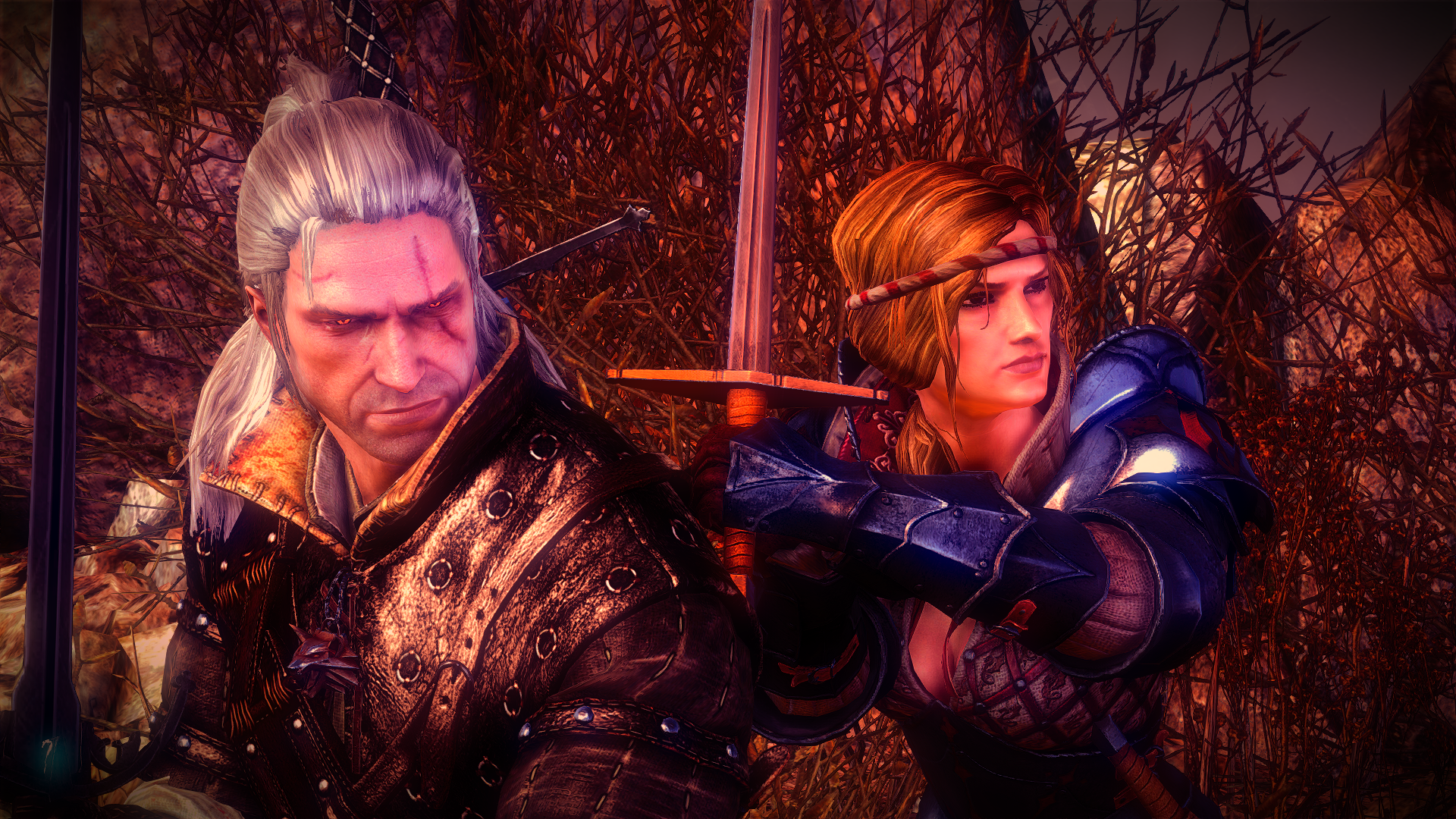
After finishing The Witcher 2, with its epic and dark tale full of twists, betrayals, and monsters — human and otherwise — I decided I needed a break from games with strong stories. I love story-focused games, as any longtime reader will know, but such games require something of an investment every time I play. I need to remind myself of everything that’s happened so far, and let myself get absorbed by the events unfolding before me. This makes it hard to play such games in short spurts. Normally, when I only have a little time to play, I favor roguelikes or other games with shorter play sessions, but even these involve stories, although they are written in large part by the player. The time investment may be smaller, but the investment in the unfolding story is not.

So I decided to seek out games without any stories. I’ve played some games like this before, but tired of them before I was finished. I think that’s because I tried to play them the way I play story-heavy games: all at once, to the exclusion of most other games, until I’ve finished. This time, I thought I’d tackle a few of these games simultaneously, returning to them occasionally when I’m in the mood, alongside whatever else I decide to play. I’ve written about three of them here.

Return To The Witcher 2 Successful

As always, you can click on images to view larger versions. Also, if you are considering playing The Witcher 2, I recommend the original Polish voices with subtitles. They’re just better.

After my first post chronicling my return to the Witcher 2, I imagined I’d have two more, one for each of the two remaining Chapters in the game. But after I finished Chapter 2 I just kept on going, and I’ve now finished the game. Now that I’ve seen both sides of the story, I can write my thoughts on the game as a whole.

If you’re unfamiliar with The Witcher games, you should read my posts about the first game before reading this. And, of course, you should read my earlier post discussing my thoughts on the Prologue and first Chapter of The Witcher 2.

Page 43 of 61

Powered by WordPress & Theme by Anders Norén