Game-related ramblings.

Category: Uncategorized Page 38 of 61

The Mysteries Of Superbrothers: Sword and Sworcery EP

As always, you may click on images to view larger versions.

Superbrothers: Sword and Sworcery EP is one of those games that I picked up not long after release but never got around to playing, until now. Its distinctive art style made an impression on me at the time, and I recall seeing lots of discussion surrounding it after its 2011 release, but somehow I never read much about it, and when I finally decided to play it I went in knowing almost nothing. Having everything be a surprise was a real pleasure, so I have tried to write about it without revealing too much.

The Future Sound Of Mushroom 11

As always, you may click on images to view larger versions.

When I first heard about Mushroom 11, I was intrigued by its core concept: players control a strange amoeba-fungus creature by erasing it, using a glorified version of the eraser tool found in most graphics editing software. Erasing the creature causes it to regrow itself from the opposite side, so the creature can be made to move around and change shape. A puzzle platform adventure based on this idea sounded interesting. But what really got my attention was when I watched a trailer and recognized the music. It was The Future Sound of London, one of my favorite electronic music artists. Some quick searching online revealed that The Future Sound of London provide the entire score for the game, mostly in the form of previously released tracks, but also with a few that can’t be found elsewhere.

Well, then.

The Complete Infernal Medicine

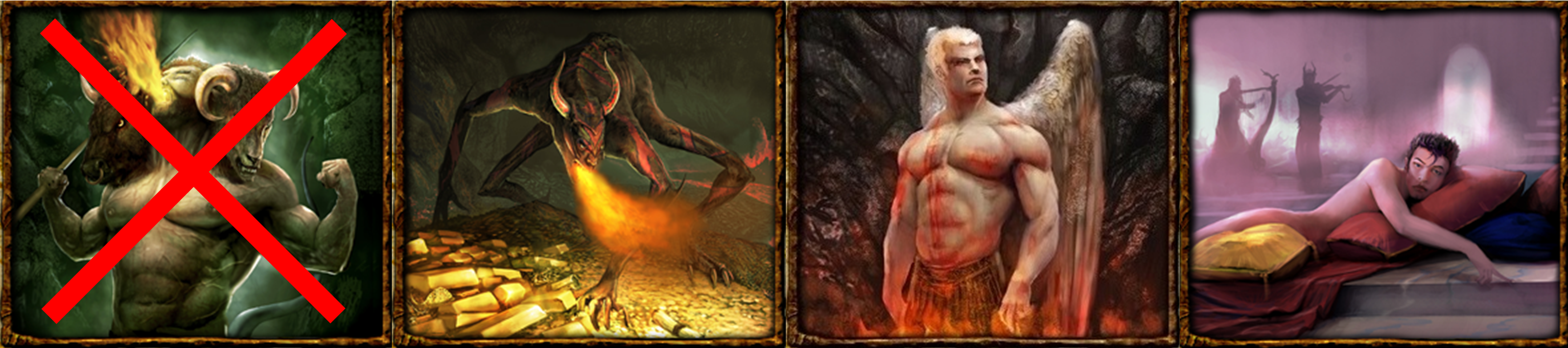
At long last, the epic Solium Infernum diary known as Infernal Medicine is complete! There are links to each portion of it below. I’d like to extend the warmest thanks to my contributors Anonymoeba, Baleygr, and Codename Duchess for making this possible. They are fine, upstanding citizens… er, I mean vile, conniving fiends.

Part 1 (Turns 1-10)
Part 2 (Turns 11-20)
Part 3 (Turns 21-30)
Part 4 (Turns 31-40)
Part 5 (Turns 41-49 and the epilogue)

Solium Infernum is available directly from developers Cryptic Comet. If you like what you see, and you think you’re ready to step into the inferno, drop me a line and I’ll be happy to host a new game.

Read on for a few (spoiler-free!) final thoughts on Infernal Medicine.

Infernal Medicine: Another Solium Infernum Diary (part 5)

Readers unfamiliar with Solium Infernum may wish to read my original post about the game, as well as my first, massive Solium Infernum diary, Hell Or High Water, before continuing. And you should definitely read part 1, part 2, part 3 and part 4 of Infernal Medicine to get up to speed. Lastly, as always, you may click on images to view larger versions.

Last time, Hell was rocked by scandal. First, Kivah made an audacious and unexpected move: a suicide run at Pandemonium, using the Orb of Oblivion to level the capital city. The Infernal Conclave survived, but now no one can try to take the throne by force. Kivah was excommunicated for his crimes, and Anonymoeba and Baleygr moved in to conquer his holdings. Baleygr lost his legion to ill luck in combat, and Anonymoeba took it all, banishing Kivah to the Abyss. Later, Codename Duchess managed to win a second vendetta against Anonymoeba, one that they had mutually agreed to via a behind-the-scenes deal. On turn 39, Codename Duchess revealed his Playing For Keeps perk (conspicuously not reported by Anonymoeba’s spies) by declaring Blood Feud on Anonymoba with only two (instead of the usual three) vendetta victories under his belt. He held initiative advantage, so there was nothing Anonymoeba could do, and on turn 40 Codename Duchess captured Anonymoeba’s stronghold, banishing him to the Abyss.

Only four archfiends remain.

Codename Duchess is poised to take Anonymoeba’s former territory and Places of Power, which include those that used to belong to Kivah. But Baleygr, who had all but given up on the game, saw another chance to capture some of Kivah’s old Places of Power. And the Magistrate’s plan to win through wealth is finally paying off; he’s taken the lead in Prestige. But he’s been hit with curses and thievery from Beowulf, including the theft of his star duelist praetor, Morax. Now The Magistrate faces a duel against his former champion, but he’s sending in Vassago, a praetor he stole from Anonymoeba (before his banishment) and trained with powerful combat moves.

Here is what happened.

Revisiting Adelpha: Outcast 1.1

As always, you may click on images to view larger versions.

A few months ago, I posted the news that Outcast: Second Contact — a high-resolution remaster of the 1999 game Outcast — had been released. This was exciting news, since the original Outcast was the subject of one of my first ever History Lessons posts; a game I played for the first time in 2009 and absolutely loved. Before trying the new version, however, I wanted to revisit the original, this time taking advantage of the 1.1 update that developers Appeal / Fresh3D released in 2014, which allows for modern resolutions (the original’s awkward 512×384 is difficult to display on today’s monitors), improved performance, and fixes issues relating to processor speed. It is, in theory, the ultimate way to play the original game, and I’m planning to directly compare it to the Second Contact remaster.

Infernal Medicine: Another Solium Infernum Diary (part 4)

Readers unfamiliar with Solium Infernum may wish to read my original post about the game, as well as my first, massive Solium Infernum diary, Hell Or High Water, before continuing. And you should definitely read part 1, part 2 and part 3 of Infernal Medicine to get up to speed. Lastly, as always, you may click on images to view larger versions.

Things are heating up in Hell. Last time, The Magistrate’s plans to win by being the richest archfiend around hit a snag when Beowulf cursed his praetor Morax, temporarily blocking his special combat moves just before his duel with Anonymoeba’s champion. Anonymoeba began to focus on secret objectives, and opened a dialogue with Codename Duchess to end hostilities so he can direct his aggression at Kivah and The Magistrate. Codename Duchess continued his attempts to win two vendettas against the same archfiend, so he can use his Playing For Keeps perk to claim Blood Feud and eliminate them from the game. So far, he’s managed one win against Anonymoeba. And Baleygr, who has a huge territory but lower income, planned an eventual assault on the Pit of Tartarus, the last remaning unconquered Place of Power on the map. His plan involves some diplomatic action against The Magistrate.

Here is what happened.

Console History: Dragon Quest

This is Console History, a special sub-series of my more general History Lessons series, covering console role-playing games, action role-playing games, Metroidvanias, and action-adventure games in nominally chronological order starting in the late 1980s. The chronology is garbled in the beginning as the scope of the series expanded, but it gets more organized later on. As always, you may click on images to view larger versions.

Well, this is getting ridiculous. When I wrote my History Lessons post about Final Fantasy, I outlined an ambitious plan to give the same treatment to the rest of that series (or at least the older entries). Now, nearly two years later, instead of finally tackling the second Final Fantasy game, I decided I really should go through the Dragon Quest series (known as Dragon Warrior in the United States until 2005) too. Maybe I’ll be finished with all of these in a decade or two.

But there is some method to my madness. Dragon Quest was released before Final Fantasy (1986 to Final Fantasy’s 1987, although the games didn’t come to the United States until 1989 and 1990, respectively), and is widely regarded as the game that set the mold for the entire genre of Japanese-style role-playing games. It could be cited as a direct inspiration for Final Fantasy, and it spawned its own long-running series (eleven main games plus a bunch of spin-offs) to rival the behemoth that is the Final Fantasy franchise. While I played some of the original Dragon Quest — which had to change its name to Dragon Warrior in the United States to avoid infringing on the trademark of the tabletop game DragonQuest — I never got far, and I’m less familiar with the series as a whole than I am with Final Fantasy. Playing Final Fantasy for its History Lessons post sparked my interest in the evolution of the Dragon Quest series as well.

Infernal Medicine: Another Solium Infernum Diary (part 3)

Readers unfamiliar with Solium Infernum may wish to read my original post about the game, as well as my first, massive Solium Infernum diary, Hell Or High Water, before continuing. And you should definitely read part 1 and part 2 of Infernal Medicine to get up to speed. Lastly, as always, you may click on images to view larger versions.

Six archfiends wish to ascend the throne in Hell. Four of them are chronicling their schemes here. The story so far: Codename Duchess has been trying to win vendettas against other archfiends so he can take advantage of his Playing For Keeps perk, which lets him claim Blood Feud — an all out war — after only two vendettas, instead of the normal three. He failed in a vendetta against Beowulf, but managed to start a new one against Anonymoeba. Anonymoeba has struck a balance between expansion and boosting his own power, using his Seer perk to learn secrets about his opponents. His spies, however, conspicuously failed to mention Codename Duchess’ Playing For Keeps perk. As Codename Duchess’ vendetta began, Anonymoeba used his personal legion’s Mountain Walk ability to strike at Codename Duchess’ tail and steal a Place of Power from him.

Baleygr has been expanding aggressively, claiming vast tracts of territory with his legions that grow in power as his own archfiend’s power grows, thanks to his Master Archer and Master of the Sword perks. He’s just managed to start a vendetta with The Magsitrate. The Magistrate hasn’t expanded at all, instead focusing on getting as rich as possible. But his praetor Morax did (barely) manage to win a duel against Kivah’s praetor Haagenti, and he hired the expensive and powerful Sons of Typhon to try to defend against Baleygr. At the same time, he played the Infernal Perfidy event, which sent the Infernal Inquisition through Hell, killing every legion that wasn’t a personal guard and disrupting everyone’s battle plans.

Here is what happened.

History Lessons: Nahlakh

Other History Lessons posts can be found here. As always, you may click on images to view larger versions.

I first learned about Tom Proudfoot’s games years ago, probably around 2007 or 2008. At the time I was looking for some free, classic turn-based role-playing games, and found mentions of his work somewhere online. The first game of his I tried was Natuk, which is the more polished sequel to Nahlakh, but I eventually got bored of it. Later, I also tried a game called Helherron, which is not by Tom Proudfoot but draws heavy inspiration from his games. I eventually tired of that as well, although I was very surprised to see, when looking it up now, that its developer has resumed work on it after a decade of inactivity, with a bunch of new updates this year. Perhaps I’ll take a look at it again soon.

But I didn’t know about that when I saw a discussion of Tom Proudfoot’s games on the GOG forums, and decided to take another look at them. This time I wanted to start at the beginning, with his first game, Nahlakh.

Outcast: Second Contact Released

One of the first History Lessons posts I wrote for this blog was about Outcast, back before I even had screenshots in my posts. Spoiler alert: I loved it. It’s a wildly ambitious game that was way ahead of its time and still feels distinct from the modern games that eventually adopted many of its ideas. Later, I posted about a Kickstarter attempt by the original developers to fund an HD remake, in the hopes of eventually making a sequel. That Kickstater campaign failed, but the team went ahead and made the HD remake anyway. Titled Outcast: Second Contact, it’s available now on Steam, as well as PS4 and Xbox One (the original was PC-only).

As usual, I’m hopelessly behind and short on free time, so I haven’t had a chance to play it yet. In fact, I’ve started playing Outcast 1.1, an earlier update that the developers made to the original game to make it play nicer with modern computers and allow higher resolutions. I’m hoping to compare it directly to Second Contact so I can report on what’s changed, and which version you might prefer. So I’ll write about that… eventually. In the meantime, I wanted to announce Second Contact’s release in case any readers are interested. Many players, myself included, missed Outcast the first time around, so this is a great chance to discover a great game.

Page 38 of 61

Powered by WordPress & Theme by Anders Norén