Game-related ramblings.

Category: Uncategorized Page 37 of 61

History Lessons: DROD: The City Beneath

Other History Lessons posts can be found here. In this case, you should read the History Lesson posts about DROD: King Dugan’s Dungeon and DROD: Journey To Rooted Hold in particular before proceeding. Lastly, as always, you may click on images to view larger versions.

DROD: The City Beneath is the game I thought I was getting when I first played Journey To Rooted Hold. Back then I expected a story-driven puzzle game, only to be confounded by its rigid 25-floor structure, in which every room of every floor must be cleared even if it had nothing to do with protagonist Beethro Budkin’s mission. It wasn’t until I started the DROD series from the beginning that it finally clicked, and I completed Journey To Rooted Hold — even its crushingly difficult later levels — eager to see what came next.

A Cold War In Hell: A Solium Infernum Story

I have written many words about Solium Infernum, including two epic turn-by-turn diaries. But I haven’t stopped playing, and the stories haven’t stopped coming. This account won’t describe every single turn, but will instead offer a summary, from my perspective only, of a recent game with a particularly dramatic finish. You should be able to follow along even if you aren’t familiar with the game, but if you want to learn more about how Solium Infernum works, you may wish to read my original post about it, or peruse one or both of the two huge diaries, first. Lastly, as always, you may click on images to view larger versions.

Lucifer’s throne stands empty. Six archfiends will vie for it, in a test moderated by the Infernal Conclave. Unfolding in turn-based fashion, the archfiends will submit orders that will be processed simultaneously every few days, leaving plenty of time for behind-the-scenes scheming. This contest will be longer than in the past; once the Conclave has drawn 20 tokens — a process which will take months of real time — the most Prestigious archfiend shall be appointed ruler of Hell. The arena, a wide expanse of the Hellish plain, is also larger than before, and peppered with more numerous Places of Power. Archfiends will surely conquer the garrisons of these Places and take command to earn Prestige each turn, then engineer vendettas with their rivals in order to fight short, strategic wars over them.

But not my archfiend, Brunt. He is not a fighter. His personal legion is pathetically weak. Brunt is, however, a Master Administrator, able to attach an extra Unholy Relic (or praetor commander) to each of his Places of Power. He will amass as many Unholy Relics as possible, using them to grow his power and Prestige. He also happens to be an Infernal Cardinal, letting him demand better tribute than the other archfiends in order to finance his collection. He might conquer a Place of Power or two, but only to use them as places to display his Relics, inspiring awe and fear in his rivals.

At least, that’s the plan. But in Hell, things rarely go to plan.

Keeping Score: Guacamelee! Super Turbo Championship Edition

This is Keeping Score, a series about games and their soundtracks. As always, you may click on images to view larger versions.

Guacamelee! is a game that immediately appealed. It is a platformer of the type that has unfortunately been labeled “metroidvania“, referencing the Metroid and Castlevania series of games. I have tried to find a name for this sub-genre that is not dependent on knowledge of other games, opting for “exploration platformer” in the past, but that moniker that does not capture some very specific connotations that come with “metroidvania”: a freely explorable world in which players gradually find new abilities that can circumvent barriers that previously blocked off access to other areas. You know, like those Metroid and Castlevania games. Sigh.

I generally enjoy these types of games, but Guacamelee! stands out from the crowd. For starters, it’s about luchadores. For those who do not know, luchadores are Mexican professional wrestlers, famous for their colorful masks and acrobatic wrestling moves. Juan, the protagonist of Guacamelee!, must master the mystical moves of the luchador in order to stop undead tyrant Calaca from merging the world of the living and the world of the dead, with dire consequences for both. I am on board for this. There might even be some mariachi trumpets.

Keeping Score: Floor Kids

This is Keeping Score, a series about games and their soundtracks. As always, you may click on images to view larger versions.

Unlike most games, my interest in Floor Kids began with its soundtrack. Composed and performed by Kid Koala, who is my favorite DJ (and, apparently, also Your Mom’s Favorite DJ), I heard about the game through his social media posts about the soundtrack he was making. If the new music didn’t have me excited enough, the game looked great too: a hand-drawn animated game about breakdancing, made by actual breakdancers with great love and respect for the scene. Promotional clips looked fantastic, and the game earned praise when it released as a Nintendo Switch exclusive. After a few months of exclusivity were over, it came to PC via Steam and I picked it up, along with the soundtrack.

Keeping Score: Teleglitch: Die More Edition

This is Keeping Score, a series about games and their soundtracks. As always, you may click on images to view larger versions.

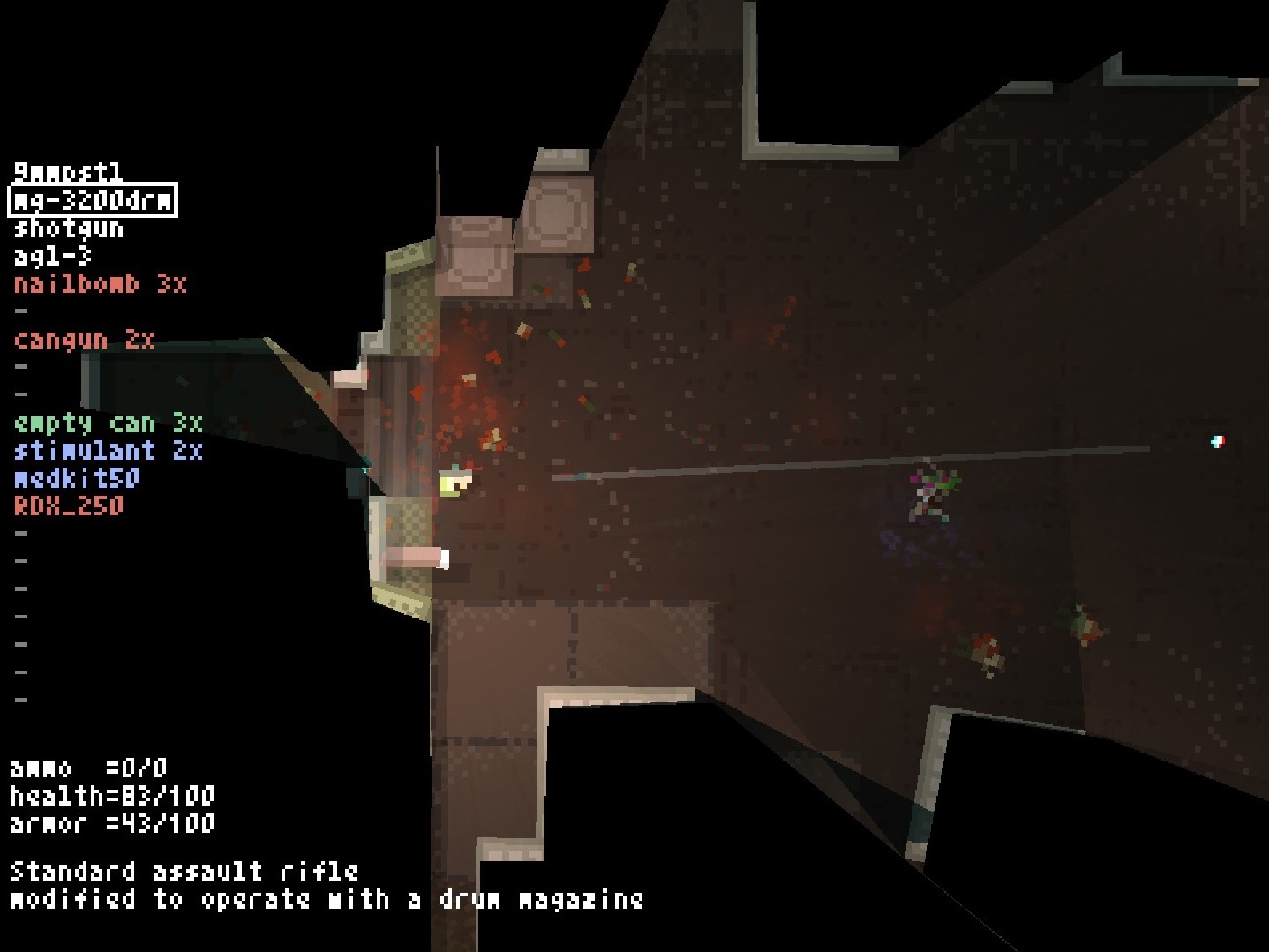
I’ve been meaning to play Teleglitch for some time, ever since reading enthusiastic impressions from multiple writers over at Rock, Paper, Shotgun. It’s a creepy science fiction game about escaping a futuristic military research facility in which studies on long-range teleportation have gone horribly wrong, resulting in the titular teleglitch. Originally released in 2012, the Die More Edition followed in 2013, constituting a major overhaul of the whole game with a bunch of new stuff. Knowing me, getting to it five years late isn’t actually that bad.

Keeping Score: The Real Texas

As always, you may click on images to view larger versions.

Like many people, I have a large backlog of games that I’ve purchased but have not yet played. As I was looking through it to choose another game to play, I realized that many of them had their soundtracks included. Given my love for both games and music, I decided to start playing these and write about both the games and their soundtracks. This is Keeping Score.

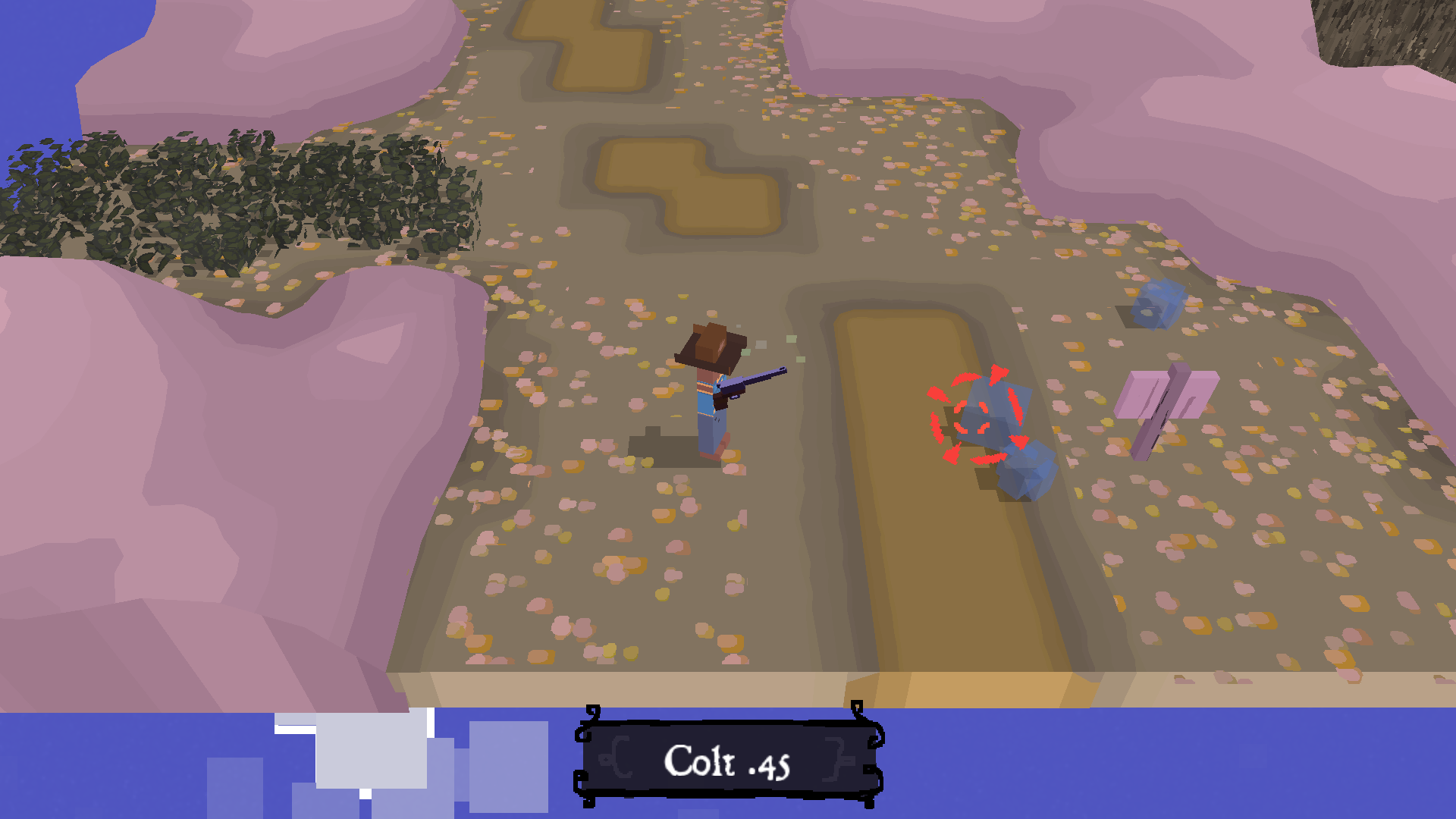
The first game I chose is one I’ve been meaning to play for some time. It’s The Real Texas, by Kitty Lambda (aka Calvin French), which I bought way back in 2012, shortly after its release. It came to my attention again a couple of years ago when Calvin French emailed me to tell me a mini-sequel called Cellpop Goes Out at Night had been released, and I got it for free since I was an early supporter of the original. That made me want to finally play it, but apparently it takes me two years to actually do that once I think of it (Solium Infernum may have delayed things, too). Well, I’ve played it now, and it’s certainly an odd one.

The Joyous Destruction Of Broforce

As always, you may click on images to view larger versions.

After the slow-paced, thoughtful Star Trek: Judgment Rites, I decided I wanted to play something more action-packed. So I went all out with Broforce, by Free Lives. After all, sometimes you just need a game that’s full of explosions. Broforce is an action platformer homage to 1980s Hollywood action films, and underneath its cacophany of gunfire, airstrikes, and ballooning body count, it’s actually a very smart design.

History Lessons: Star Trek: Judgment Rites

You can read other History Lessons posts here. And, as always, you may click on images to view larger versions.

Oh dear. When I wrote my History Lessons post about Star Trek 25th Anniversary, I intended to play its sequel Star Trek: Judgment Rites soon afterwards, with only a short break between. A few months at most. But it’s been over a year now. What happened? Oh, right: Solium Infernum happened. I suppose that justifies some delays. Now I’ve finally played through Judgment Rites, although it was too late to fit into my Star Trek watching spree which served as motivation for playing Star Trek 25th Anniversary. I’ve not only finished watching all the old shows and films, I also watched the debut season of the new show, Star Trek: Discovery (brief synopsis: I had many reservations at the beginning but by the end I was entirely on board). Since Discovery serves as a prequel to the original series, and is hinting at more direct connections to original series characters in its upcoming second season, I figured it was high time to finish my adventures with Captain Kirk and his crew.

It’s Been A Long Time: Iconoclasts

As always, you may click on images to view larger versions.

I’ve been waiting for Iconoclasts for a long time. I first found out about Konjak’s games around 2007 or so, playing through Noitu Love, Legend of Princess, and some of his unfinished projects like Mina of the Pirates and Ivory Springs — the latter of which was his first attempt at the concept which eventually became Iconoclasts. Later, I enjoyed Noitu Love 2 (and wrote about it), as well as Konjak’s playable teaser for Iconoclasts (back when it had a “The” in front of the name) which arrived way back in… actually I’m not sure when it appeared, but I mentioned it in my 2012 post about Noitu Love 2, so it was sometime before that. Iconoclasts has been in development since 2010, you see, and given that Konjak had released a few unfinished and abandoned games before, I feared Iconoclasts had followed suit. I was wrong. Iconoclasts finally appeared in January, and I’ve finally played it.

Going Inside

As always, you may click on images to view larger versions.

Inside is Danish developer Playdead’s follow-up to Limbo, which was released way back in 2010. I wrote about Limbo in the early days of this blog. Looking at that now, I see that I honored the stylized all-caps naming for that game, but I cannot bring myself to do so here, for Inside or Limbo. Sorry.

Inside has obvious similarities to Limbo. In both games, players control a small boy in a dangerous and creepy environment, presented through highly stylized art. Inside has evolved that artistic style, translating the visuals into a 3D, flat-shaded style that is predominantly — but unlike Limbo, not entirely — monochrome. The boy is also more realistically proportioned this time around, without the exaggerated large head from Limbo. But the art is similar enough to be recognizable, and in both games the boy begins in dark woods, with no explanation. Players can move left or right, jump, and perform context-sensitive interactions with the environment, and must use these simple controls to explore and survive.

Page 37 of 61

Powered by WordPress & Theme by Anders Norén