Game-related ramblings.

Tag: Famicom Page 2 of 3

Console History: Faxanadu

This is Console History, a special sub-series of my more general History Lessons series, covering console role-playing games, action role-playing games, Metroidvanias, and action-adventure games in nominally chronological order starting in the late 1980s. The chronology is garbled in the beginning as the scope of the series expanded, but it gets more organized later on. As always, you may click on images to view larger versions.

For those just tuning in, I’ve been playing early console role-playing games (and some adjacent games) for this sub-series of my broader History Lessons series. I’m nominally trying to go chronologically by the original release date (which is usually the Japanese release date) but I keep expanding the scope to include more games, so I keep jumping back and forth. The farthest I’ve made it in time is SpellCaster for the Sega Master System, which released on September 23, 1988. But I’m currently on a trip back to 1987 to fill in a few games I realized I should have included. The most recent of these is Faxanadu, by Hudson Soft, which released in Japan on November 16, 1987, and was later brought to the US in August 1989.

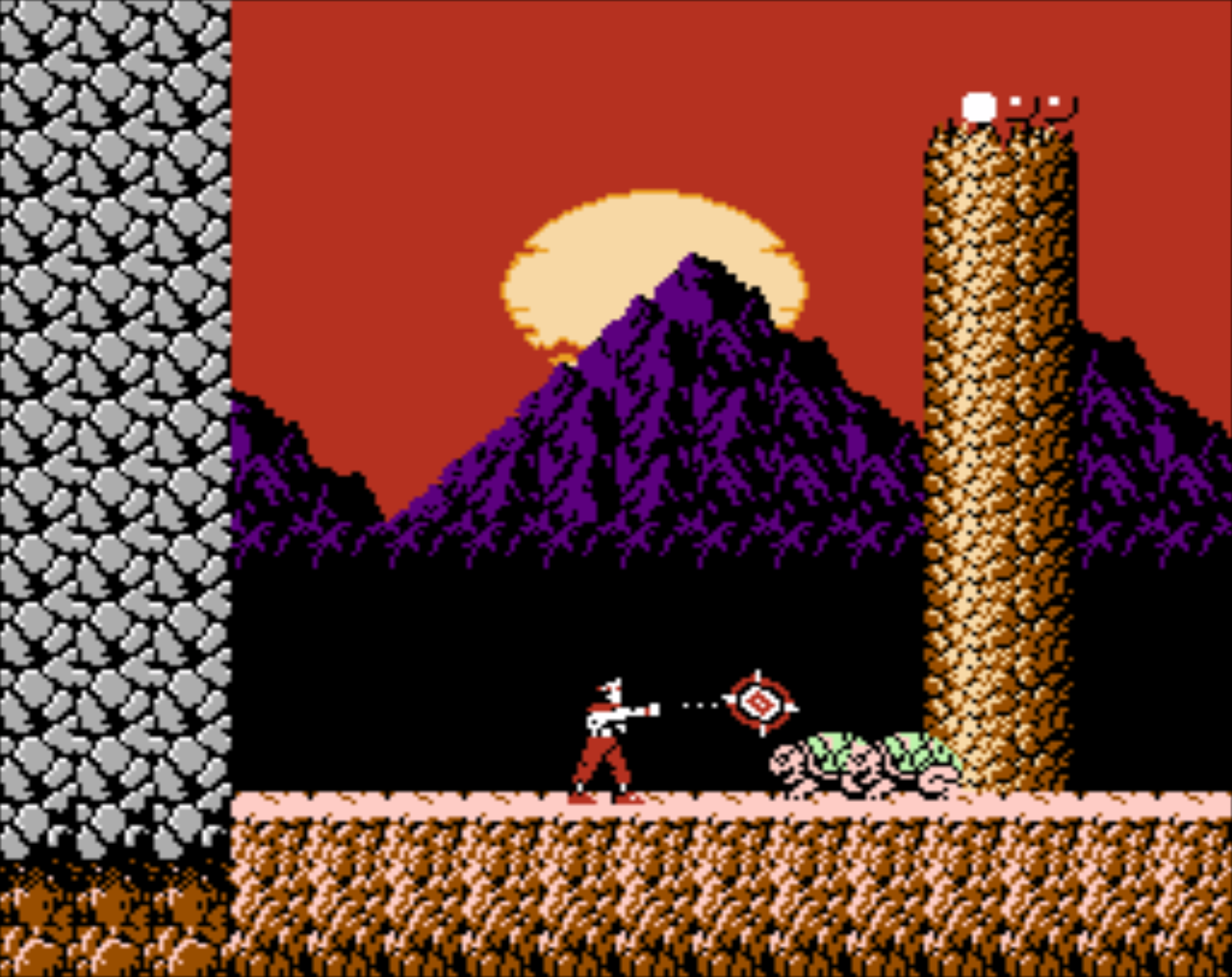
Console History: Rygar

This is Console History, a special sub-series of my more general History Lessons series, covering console role-playing games, action role-playing games, Metroidvanias, and action-adventure games in nominally chronological order starting in the late 1980s. The chronology is garbled in the beginning as the scope of the series expanded, but it gets more organized later on. As always, you may click on images to view larger versions.

For those just tuning in, I’m taking a detour from the nominal timeline of this series. I say “nominal” because I’ve completely failed to be chronological so far. While I started out focused on early console role-playing games, this quickly expanded to include action role-playing hybrids, and now early Metroidvania games (including Metroid and Castlevania II: Simon’s Quest themselves). Having learned about some more early titles that experimented with this nonlinear open world platformer style, I’ve gone back to play a few. That means that of the 24 games I’ve covered so far, Rygar is actually the 9th in order of Japanese release date. It arrived in April 1987, almost exactly one month after The Goonies II, which I wrote about last time. It only took three months to get a US release, however, meaning it actually made it to the States about four months ahead of The Goonies II.

Console History: The Goonies II

This is Console History, a special sub-series of my more general History Lessons series, covering console role-playing games, action role-playing games, Metroidvanias, and action-adventure games in nominally chronological order starting in the late 1980s. The chronology is garbled in the beginning as the scope of the series expanded, but it gets more organized later on. As always, you may click on images to view larger versions.

It was inevitable. Last time, I broke from my timeline to play Dragon Slayer IV: Drasle Family (AKA Legacy of the Wizard), a game I’d originally skipped over because I’d deemed the Dragon Slayer series to be too early, and too focused on home computer systems instead of consoles. When this blog series expanded in scope, I decided I should probably go back and play a few of the Dragon Slayer games. But with Dragon Slayer IV I didn’t just find a great melding of role-playing and platforming action, I found one of the games that helped define the Metroidvania genre, and a very impressive one at that. From there, I started reading about some other early games that built the foundations for Metroidvanias, and since I’d already covered Metroid and Castlevania II: Simon’s Quest, I figured I might as well go back and play these other early games too. I promise I’ll get back to my timeline eventually.

First up is The Goonies II, by Konami, which was actually quite early. Released in March 1987 (coming to the US that November), it slots after Esper Dream (also by Konami) in my timeline, and the only platformers I’ve covered that predate it are Metroid and Zelda II: The Adventure of Link. That means it got in on defining nonlinear, exploratory platforming before Castlevania II: Simon’s Quest would add the “vania” to the Metroidvania genre. But that was also by Konami, so I guess they were just building on their own work. Perhaps the most interesting thing about The Goonies II, however, is that it combines platforming with first-person adventure sequences, much like Sega’s Spellcaster would do a year and a half later.

Console History: Dragon Slayer IV: Drasle Family (AKA Legacy Of The Wizard)

This is Console History, a special sub-series of my more general History Lessons series, covering console role-playing games, action role-playing games, Metroidvanias, and action-adventure games in nominally chronological order starting in the late 1980s. The chronology is garbled in the beginning as the scope of the series expanded, but it gets more organized later on. As always, you may click on images to view larger versions.

I wasn’t planning to cover any of Nihon Falcom’s Dragon Slayer games for this series. The first Dragon Slayer appeared way back in 1984 for the Japanese PC-88 home computer (and, later, other home computers like the PC-98 and FM-7), where it pioneered an action role-playing design in which players explore top-down screens in real time, bumping into enemies to fight them. This design was hugely influential, inspiring the Hydlide series (I covered the third game as part of this blog series) as well Nihon Falcom’s own Ys series (I covered the first two games) and Nintendo’s The Legend of Zelda, which added innovations that arguably spawned a whole new genre. But Dragon Slayer itself sounded quite simple in comparison to these later titles, as well as potentially frustrating due to high difficulty or unclear objectives. And, of course, most of the Dragon Slayer games were never translated into English. So, early on in my planning sessions I decided to exclude them.

Then I read more about some of the later Dragon Slayer games that were eventually localized in English, which sounded much more interesting than I expected. So, I’m breaking from my timeline once again to go back and play a couple of them. The first is Dragon Slayer IV: Drasle Family (that stands for DRAgon SLEyer Family, of course), originally released in July 1987 for the MSX and MSX2 home computer systems, and later ported to Nintendo’s Famicom (for this blog series, it comes after Wonder Boy In Monster Land and before Cleopatra no Mahou in the timeline). Since American players had never seen any of the Dragon Slayer games before, it was renamed Legacy of the Wizard for its official US release on the NES about two years later. It keeps the single-square-sized characters and blocks from the original Dragon Slayer, but reimagines the labyrinthine dungeon as a huge side-scrolling platformer world, in which ledges, pits, ladders, and doors intertwine to create different paths. Players then choose from (and switch between) five playable family members, each with different abilities and usable items, so the entire game becomes a puzzle the family must solve together. Following on from Metroid, which had released about a year earlier, Dragon Slayer IV helped define what would become known as the Metroidvania genre. It sounded fascinating, and I decided I had to try it.

Console History: Castlevania II: Simon’s Quest

This is Console History, a special sub-series of my more general History Lessons series, covering console role-playing games, action role-playing games, Metroidvanias, and action-adventure games in nominally chronological order starting in the late 1980s. The chronology is garbled in the beginning as the scope of the series expanded, but it gets more organized later on. As always, you may click on images to view larger versions.

When I wrote about Ys II: Ancient Ys Vanished – The Final Chapter, I celebrated finally getting my timeline in order for this series. I had started haphazardly, playing things and then realizing I should add other games that had come before, resulting in awkward jumps back and forth in time. With that post, however, I had finally finished playing catch up, and everything should have been in nice chronological order moving forward. But it only took one more post — about Sega’s Master System game Lord of the Sword — to make me realize I had to jump back in time again. Lord of the Sword’s design, which is basically an action platformer game but set in an open world inspired by role-playing games, reminded me of Castlevania II: Simon’s Quest, a game I really should have covered already. I wrote about Metroid, after all, and Simon’s Quest is the game that added the “vania” to Metroid to create the “metroidvania” genre.

Console History: Cleopatra No Mahou (The Cursed Treasure Of Cleopatra)

This is Console History, a special sub-series of my more general History Lessons series, covering console role-playing games, action role-playing games, Metroidvanias, and action-adventure games in nominally chronological order starting in the late 1980s. The chronology is garbled in the beginning as the scope of the series expanded, but it gets more organized later on. As always, you may click on images to view larger versions.

When I started this series about console game history, the first game I wrote about was Final Fantasy. That was before I got more organized and realized there were older games I wanted to cover as well. Games like Cleopatra no Mahou (which translates roughly to “The Cursed Treasure of Cleopatra”), the first role-playing game that Square made, before getting their breakout hit with Final Fantasy. The story goes that the “Final” in Final Fantasy referred to the fact that it may well have been Square’s final game, although that may not be wholly accurate. But Square were in financial trouble at the time, because their earlier games hadn’t sold well. I wanted to play Cleopatra no Mahou not only to see what Square’s early foray into the role-playing genre was like, but also because I was intrigued by its modern day Egyptian setting and blending of role-playing design with adventure game elements.

Console History: Esper Dream

This is Console History, a special sub-series of my more general History Lessons series, covering console role-playing games, action role-playing games, Metroidvanias, and action-adventure games in nominally chronological order starting in the late 1980s. The chronology is garbled in the beginning as the scope of the series expanded, but it gets more organized later on. As always, you may click on images to view larger versions.

In February 1987, just over a month after Zelda II: The Adventure of Link released in Japan on the Famicom Disk System, another action role-playing game appeared for the system that shares some of its ideas. Esper Dream, developed and published by Konami, features free exploration from a top-down viewpoint and random battles that can be seen, and sometimes avoided, on the main screen, like the shadowy creatures on Zelda II’s world map. Also like Zelda II, triggering a battle leads to a separate combat encounter, although in this case it’s a single screen top-down arena rather than a side-scrolling area. Esper Dream also sets itself apart by rejecting the swords and magic fantasy setting that most role-playing games used at the time, instead centering on a young boy with psychic abilities. Falling asleep while reading a book, his dreams bring the world of the book to life, and he must set about saving Brick Town from invading monsters by exploring surreal locations and battling enemies with guns and psychic powers.

This setting made Esper Dream sound very unusual, and made me want to play it. Unlike the Zelda games, however, it was never released outside of Japan, and never had an official English translation. Fortunately, there’s an unofficial translation from Mute which let me play the game in English. Sadly, unlike the translation I used for Digital Devil Story: Megami Tensei, it doesn’t include a translation of the game manual. But there’s good info in online guides to clarify what different items and psychic powers do. Also, yes, Esper Dream released about eight months before Digital Devil Story, because I totally failed to be chronological when starting this series. But I’m working to remedy that.

Console History: Zelda II: The Adventure Of Link

This is Console History, a special sub-series of my more general History Lessons series, covering console role-playing games, action role-playing games, Metroidvanias, and action-adventure games in nominally chronological order starting in the late 1980s. The chronology is garbled in the beginning as the scope of the series expanded, but it gets more organized later on. As always, you may click on images to view larger versions.

When I wrote about the original Legend of Zelda, I discussed how it was inspired by earlier Japanese action role-playing games like Xanadu or Hydlide, but innovated by removing most of the classic role-playing mechanics such as experience points and leveling. But the sequel, which drops the “legend of” and opts simply for Zelda II: The Adventure of Link, is almost entirely different. This was on purpose. Other than the project lead and writer, the development team was entirely new, and the action gameplay shifted from the original’s top-down viewpoint to side-scrolling platforming. There’s still some top-down exploration in the form of a world map, similar to those in the Dragon Quest games, but the bulk of the game is played in the side-on view.

I remember this shift somewhat confounded my group of friends when we played it as kids, and the game never captured our imagination as strongly as the original did. One thing that I didn’t remember, however, is that Zelda II brings back some of the role-playing mechanics that its predecessor had excised. Titular protagonist Link earns experience points from defeating enemies, and upon accumulating enough can level up his attack, magic power, and defense. The series famous for establishing its own action-adventure genre, distinct from action role-playing games, had become an action role-playing game once more.

Console History: Metroid

This is Console History, a special sub-series of my more general History Lessons series, covering console role-playing games, action role-playing games, Metroidvanias, and action-adventure games in nominally chronological order starting in the late 1980s. The chronology is garbled in the beginning as the scope of the series expanded, but it gets more organized later on. As always, you may click on images to view larger versions.

Three months ago, I wrote about The Legend of Zelda, after playing it to completion for the first time. It’s still impressive today, absolutely deserving of its classic status. It also reminded me of Metroid, which released six months later in Japan but only one month later in the United States. Both games let players loose in open worlds, to explore and find upgrades that let them reach previously inaccessible places. Metroid simply trades the top-down, screen-by-screen exploration of Zelda for side-scrolling action platforming with a science fiction theme. This combination was so influential that it spawned an entire genre: the metroidvania (named for Metroid and Castlevania, more specifically the second Castlevania game, Simon’s Quest). Unlike The Legend of Zelda, I never played much Metroid myself when I was a kid, I just saw bits and pieces of it at friends’ houses. But the third game in the Metroid series, Super Metroid, is one of my favorite games ever. So I decided to go back to the beginning and play the original Metroid.

Console History: The Legend Of Zelda

This is Console History, a special sub-series of my more general History Lessons series, covering console role-playing games, action role-playing games, Metroidvanias, and action-adventure games in nominally chronological order starting in the late 1980s. The chronology is garbled in the beginning as the scope of the series expanded, but it gets more organized later on. As always, you may click on images to view larger versions.

Playing The Magic of Scheherazade made me want to return to one of its primary inspirations: The Legend of Zelda. A hugely influential classic, The Legend of Zelda was omnipresent in my childhood. First released in 1986 in Japan as a launch title for the Famicom Disk System, a version without the additional Disk System features released in North America in 1987, not long after the Nintendo Entertainment System (NES) itself (a rebranded Famicom) appeared on the market. Its iconic golden cartridge was everywhere, enough so that I never actually owned one myself; I would visit friends’ houses to play, or they would bring their cartridges to my house and we’d play on my NES. At school, we all exchanged stories of secrets we’d discovered in the game. I’d already seen and played much of The Legend of Zelda by the time I got my own copy, a re-release with a standard grey cartridge, and tried playing it more methodically. But by that point the collective interest had moved on to newer games, and while I got pretty far, I never finished the game. I’ve always meant to return at some point, and this seemed like the right time.

Page 2 of 3

Powered by WordPress & Theme by Anders Norén