Game-related ramblings.

Author: waltorious Page 9 of 34

Scratching That Itch: Asteroid Farmer

This is the second entry in the Scratching That Itch series, wherein I randomly select and write about one of the 1704 1741 games and game-related things included in the itch.io Bundle for Racial Justice and Equality. The Bundle raised $8,175,279.81 split evenly between the NAACP Legal Defense and Education Fund and Community Bail Fund, but don’t worry if you missed it. There are plenty of ways you can help support the vital cause of racial justice; try here for a start. Lastly, as always, you may click on images to view larger versions.

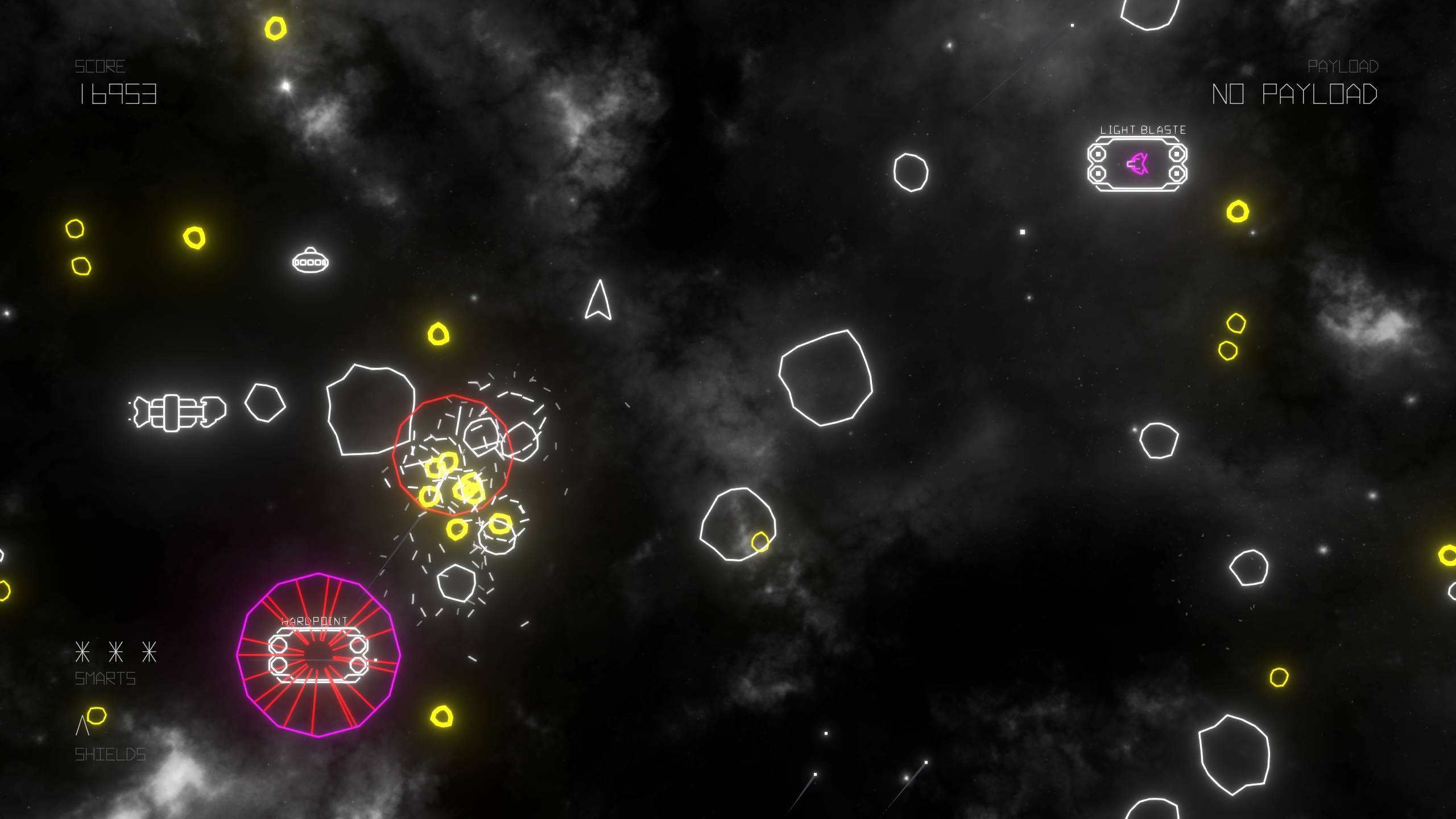
Our next random selection from the itch.io Bundle for Racial Justice and Equality is Asteroid Farmer by Allicorn Games. It’s tagline in the bundle reads:

Dodge big asteroids. Collect and deploy turrets. Scoop up the little bits.

Ah, asteroids. Ever since the classic 1979 arcade game Asteroids, asteroids have been a constant presence in video games. They threaten our space ships or even our planets, we strike back by shooting them or mining them. In reality, space is incredibly empty, even in the middle of an asteroid belt, but in video games asteroids always come in packs, ready to smash into things. But let me ask you this, Allicorn Games: what if we could talk to the asteroids?

Check Out The Humble Fight For Racial Justice Bundle

The massive itch.io Bundle for Racial Justice and Equality may be over, but if you are looking for a way to support the critical issue of racial justice while also nabbing a bunch of good games, you should check out the Humble Fight For Racial Justice Bundle, which is running this week. 100% of proceeds go to the NAACP Legal Defense Fund, Race Forward, and The Bail Project, with donors deciding how their donation is split.

The minimum donation is $30, pricier than the itch.io Bundle was, but it features a selection of highly regarded games, including several that I’ve written about on this blog. If you are unsure why you might want to play Spelunky (I wrote about the original freeware version, but the spiffy newer version offered here is even better!), FTL (plus follow-up post), The Ball, System Shock, or Broken Age, just click those links to read my thoughts on them. There are many other excellent games in there that I’m planning to eventually play and write about, too. The bundle also features a bunch of comics and books in digital format, most dealing with Black Americans and ways we can help realize racial justice.

If you can’t afford to donate right now, or you’re simply looking for other ways to help, take a look here for some ideas on how to get started.

Scratching That Itch: Time Stone

This is the first entry in the Scratching That Itch series, wherein I randomly select and write about one of the 1704 1741 games and game-related things included in the itch.io Bundle for Racial Justice and Equality. The Bundle just finished, raising $8,175,279.81 split evenly between the NAACP Legal Defense and Education Fund and Community Bail Fund, but don’t worry if you missed it. There are plenty of ways you can help support the vital cause of racial justice; try here for a start. Lastly, as always, you may click on images to view larger versions, or in this case, exactly the same size versions.

OK, here we go. With the itch.io Bundle for Racial Justice and Equality just wrapped up, I — and many others — are now staring at a whopping 1704 1741 games and game-related things. Lists and recommendations are popping up everywhere, but looking through the bundle I was intrigued by just how many of the lesser-known entries seemed interesting. So I’ve decided to start selecting things from the bundle at random, trying them out, and writing short posts about them here.

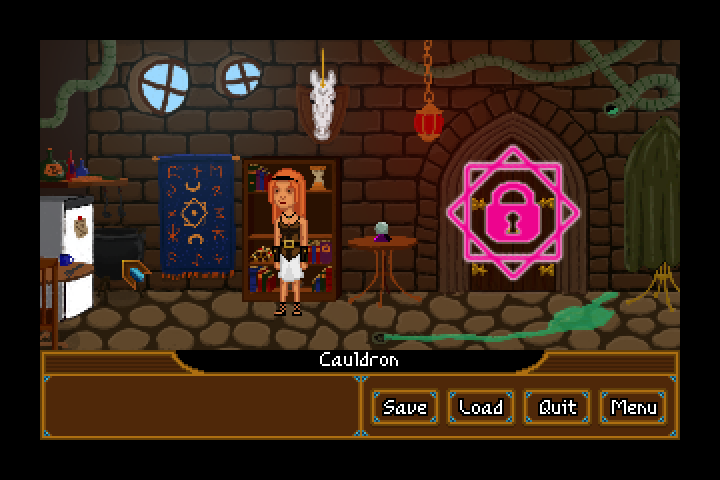
First up is Time Stone, by Scared Square Games, aka Stuart Lilford. Its tagline in the Bundle reads:

Uncover the Professor’s secret and rescue him from the evil clutches of the…

before being cruelly truncated by the character limit. A quick glance at the game page suggests this is referring to the evil clutches of the Warlock. It’s always bad news when a warlock is so evil they are referred to solely as “the Warlock”. But I guess this Professor isn’t going to rescue himself. All right, Scared Square Games, I’m in.

Black Lives Matter

This blog isn’t much of a platform, with only a handful of regular readers. But I feel compelled to add my voice to those calling for racial justice in the United States and beyond, and the sweeping reforms that are required to make that happen. As has been clearly communicated in recent weeks, those in privileged positions (such as myself) must do much more than simply express solidarity with Black people and other groups who suffer from institutional racism and societal prejudice. The murder of George Floyd by police officer Derek Chauvin may have been the event that sparked recent protests and conversations about institutional racism, but it is only the latest example of targeted brutality, atrocity, and unjust policy that stretch back centuries in the United States (and much of the rest of the world). Many privileged people are unaware of the extent of these societal problems, so the first step is education. There are countless reading lists that have done the rounds over social media recently; here’s an example roundup from Rock, Paper, Shotgun, a UK-based site about PC games. But learning about these problems is only the first step. We must take action to change our society.

For my part, I am striving to spread education about these issues to as many people as possible, through direct and open conversations with friends and acquaintances, and through this blog, limited as its reach may be. With enough people informed and enough minds changed, we can begin the hard work of fixing the deep-rooted problems in the United States and around the world. I have also donated to several organizations committed to racial justice reform, including Black Lives Matter and multiple bail funds in the United States. One of my donations was for the Bundle for Racial Justice and Equality put together by digital games storefront itch.io. When I donated there were nearly 750 games (and art assets, and music) included, but the number has now ballooned to over 1600, for a minimum donation of $5 with all proceeds split evenly between the NAACP Legal Defense and Education Fund and Community Bail Fund (I was in a position to donate more than the minimum and happily did so). At the time of writing, there is just one day left for the Bundle, which has now raised nearly $7 million USD. The Bundle is a great place to start, but if you miss your chance, or are looking for other ways to help, itch.io suggest you try here.

There are some big names in the bundle but also a whole lot of small indie offerings that I am completely unfamiliar with, including many tabletop games, and several non-game entries such as stories, art assets, or even settings or writings to use as inspiration for one’s tabletop role-playing campaigns. And that’s only from looking through the original roster of 750, before it doubled in size. So I’ve decided to start selecting items from the bundle at random, playing them, and writing short posts about them here as part of a new series. I hope this will be a way to maintain the focus of this blog — writing about games — while also continuing to highlight the problems with institutional racism that we must work to eradicate.

Look for the first of these posts soon. And let’s build a better world together.

Once More Into The Caves Of Qud

Readers unfamiliar with Caves of Qud should read my earlier posts about it first, as this post doesn’t bother explaining what it is. As always, you may click on images to view larger versions.

It’s been nearly five years since I last played Caves of Qud. But I’ve been following its development, and always intended to return to see how things were progressing. Developers Freehold Games were kind enough to give me a free copy of the game in Early Access on Steam back then, but when I saw it had also released on GOG I decided to buy it there to support development (it’s now available on itch.io as well). I was still busy playing other things, however, and didn’t actually fire it up. Finally, the periodic patch notes convinced me to dive back in. Notes like:

–Being in the same cell with slippery liquids no longer causes chairs, beds, iron maidens, and psionic sarcophagi to malfunction.
–There should be fewer game-breaking problems when you dominate a creature and a spacetime vortex consumes your dormant body.
–Cooking with the gland paste of various bearded lizards no longer forcibly removes your beak if you have one.

I was overdue for another trip to Qud.

Console History: Dragon Quest III

This is Console History, a special sub-series of my more general History Lessons series, covering console role-playing games, action role-playing games, Metroidvanias, and action-adventure games in nominally chronological order starting in the late 1980s. The chronology is garbled in the beginning as the scope of the series expanded, but it gets more organized later on. As always, you may click on images to view larger versions.

If you’re just tuning in, I’ve been (slowly) playing through the early Japanese-style role-playing games. I started with Final Fantasy, since that’s the one I played most as a kid, but then realized that I needed to back up and play Dragon Quest and Dragon Quest II, both of which appeared first. These two games set the conventions of the Japanese-style role-playing genre, but competitors soon appeared. Final Fantasy, which also ran on Nintendo’s Famicom (rebranded as the Nintendo Entertainment System in the United States), was the first on the scene, letting players make their own party of adventurers and offering a linear path through the game that was easier to follow than Dragon Quest II’s open structure. But a mere two days later, Sega released Phantasy Star for their Master System console. I went into that one without really knowing what to expect, and it was a revelation. Not only is it far more technically impressive than anything on Nintendo’s Famicom, it was way ahead of both Dragon Quest and Final Fantasy in terms of how the genre would evolve in the years to come. Phantasy Star features a colorful cast of characters with their own personalities and motivations, a well realized setting, and the seeds of a stronger story to drive events, all of which would become staples of the genre (including the Dragon Quest and Final Fantasy series). Even the science fiction elements that would become popular in the Final Fantasy series (the minimal hints in the first Final Fantasy notwithstanding) were in Phantasy Star first.

After Phantasy Star, the early Dragon Quest games already seem outdated. So now that developers Chunsoft had a chance to see how other designers interpreted the genre they started, how would they respond in their next Dragon Quest game? Well, it turns out they didn’t have too much time to adapt. Dragon Quest III released in February 1988, less than two months after Final Fantasy and Phantasy Star, so it was nearly finished by the time the team could see what other studios were up to. I should note that I’m playing the North American version known as Dragon Warrior III, which didn’t appear until 1992 and — unlike earlier entries in the series — actually had some significant changes from the original Japanese release, most notably a large increase in experience rewards from fighting monsters, which makes character leveling faster. Structurally, however, it remains similar. When doing research for this post, I learned that lead designer Yuji Horii had a policy of removing any features that had been used in other games, so it’s unlikely he would have wanted to copy anything from Final Fantasy or Phatasy Star even if there had been time to do so. But the team must have arrived at some of the same ideas independently, because Dragon Quest III has clear similarities to one (and only one) of its rivals. It’s not Phantasy Star.

Keeping Score: Furi

This is Keeping Score, a series about games and their soundtracks. As always, you may click on images to view larger versions.

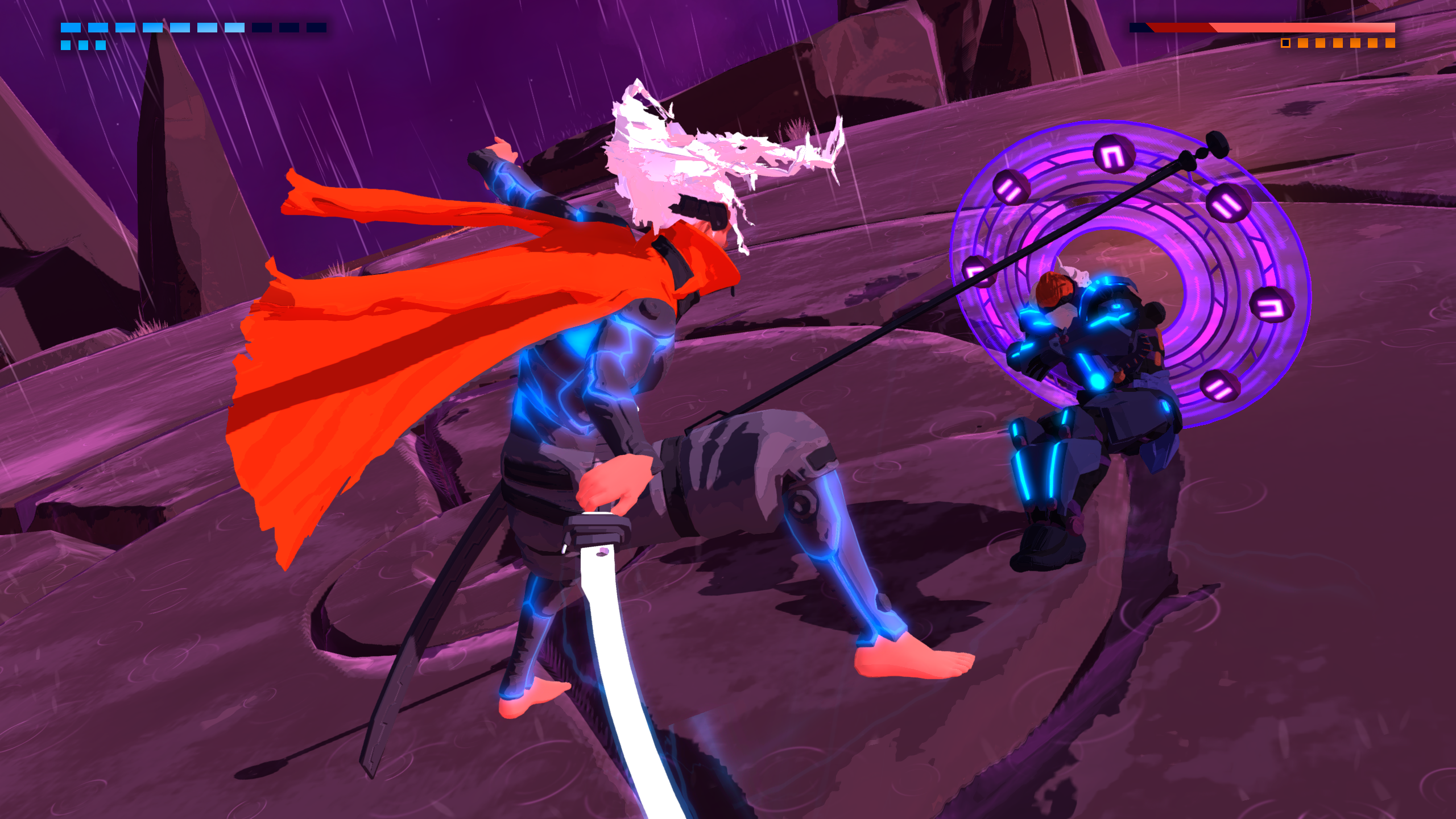
Furi, from developers The Game Bakers, combines two genres that I have little to no experience with. It’s part super-tough melee brawler, full of timed parries and lightning fast dodges, eager to put players through the ringer until they have learned to react to attacks on instinct. I haven’t played many games like that, but from what I’ve read it sounds similar to the exacting duels of Dark Souls and the rest of the FromSoftware catalog, or even “spectacle brawlers” like the Devil May Cry series and other games by Ninja Theory. But Furi is also part twin stick “bullet hell” shooter, asking players to weave through crazy patterns of deadly projectiles to stay alive. I have even less experience with these types of games, but they seem to hearken back to the design ethos of classic arcade games, with high skill ceilings that entice players to invest time in mastering the game’s intricacies. And on top of that, it’s a “boss rush” game. You know how many games have players work through large numbers of weaker opponents and traverse various obstacles, before facing a final, extra difficult “boss” enemy at the end of the level? Well, “boss rush” games get rid of all of that and just leave the bosses. Furi is a series of extremely challenging duels, and it goes all in on the concept.

I find all of this a bit intimidating. The hardest games I’ve played are classic roguelikes, which at least give me as much time as I want to consider each move. I don’t relish the prospect of practicing timed sequences over and over with a mistimed split-second reaction leading to failure, or learning to dodge insane attack patterns that fill the entire screen. But Furi is enticing in other ways. It has a bold art style, starring some sort of cyborg ninja with a cool red cloak, making his way through a strange world full of bold colors and fantastical environments. All of it is displayed with intentionally low resolution textures and shading gradient effects, such that it almost seems flat shaded a times. It’s striking, and even seeing still screenshots made me wonder if Furi might be the game that would finally convince me to leave my comfort zone and take on these notoriously difficult genres. I could even get two of them out of the way at the same time! And, to top it off, Furi features an original soundtrack composed by a who’s who list of synthwave composers, including names like Carpenter Brut, Danger, and The Toxic Avenger. Oh, all right then. I’ll give Furi a go.

Even More Amalur: The Teeth Of Naros DLC

This is a post about an add-on for the game Kingdoms of Amalur: Recoking. You may wish to read the earlier post about the base game first, and indeed the piece about its first add-on. As always, you may click on images to view larger versions.

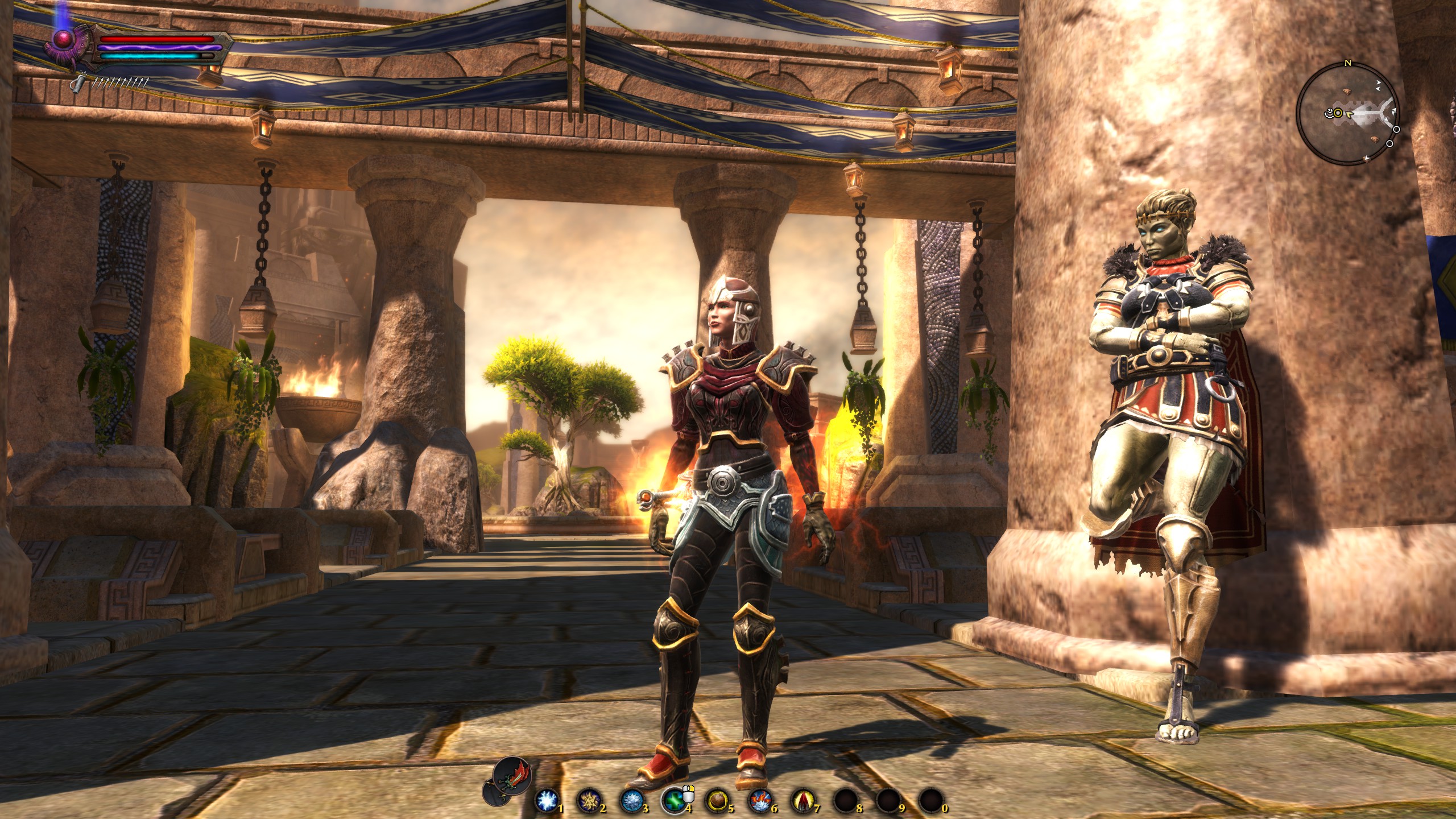
As I have said before, Kindoms of Amalur is too long. Yet, I still found myself enticed by its first piece of story DLC (that’s downloadable content for those not aware), The Legend of Dead Kel. Having come that far, I had to go all the way and also play the second and final bit of DLC, The Teeth of Naros. With undead pirates already covered in the first DLC, the premise for The Teeth of Naros is instead an expedition into the titular Teeth, which are unexplored lands to the south of the Fae forests of Dalentarth. Rumor has it they are filled with untold treasures. I was ready for a tale of frontiersmanship, establishing ourselves in a hostile wilderness, fighting off dangerous local fauna, and possibly a little commentary on colonialism as we imposed our will on some natives.

But it turns out that the expedition goes wrong almost immediately, and what The Teeth of Naros is actually about is a race of giant statue-people called the Kollossae, who are modeled after the ancient Greeks and who are struggling to finish construction of their flying city to appease their god and lift themselves out of their old, brutish ways and into civilized enlightenment. Huh.

Keeping Score: Loot Rascals

This is Keeping Score, a series about games and their soundtracks. As always, you may click on images to view larger versions.

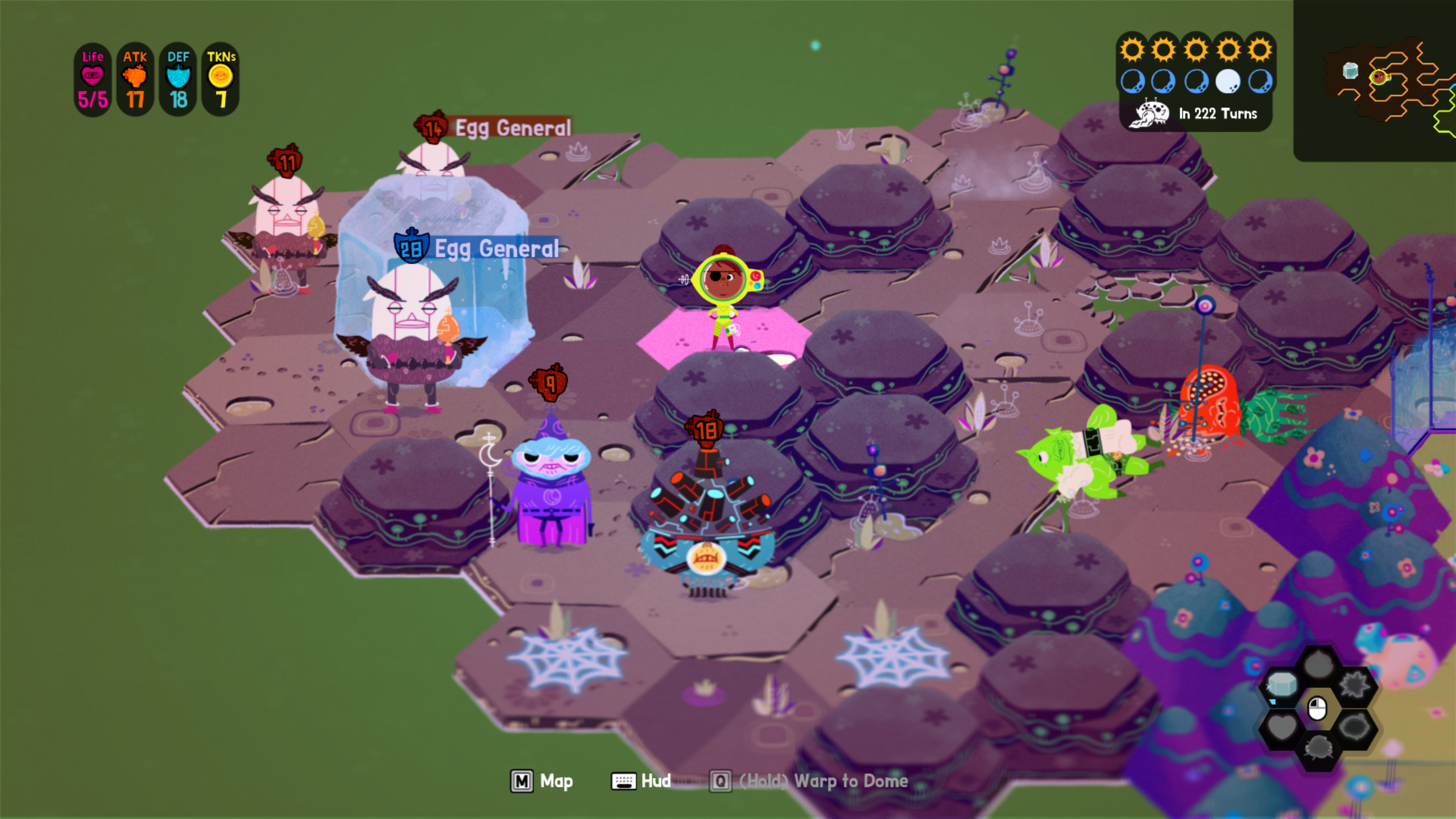
I was searching my backlog for something I could play in short sessions without getting too invested in a long story, and I settled on Loot Rascals. I don’t remember when I got it, but I do remember seeing some positive reviews online, praising it as a quirky and light game that sounded like it was exactly what I was looking for. Players explore a procedurally generated hex-based map, generated anew each game, while scrounging for loot and battling the colorful, titular rascals. Everything from the landscape to the bizarre cast of rascals is rendered in a beautiful watercolor style, and there’s even a Scottish robot sidekick with a teapot for a head. What’s not to like?

Even More Amalur: The Legend Of Dead Kel DLC

This is a post about an add-on for the game Kingdoms of Amalur: Recoking. You may wish to read the earlier post about the base game first. As always, you may click on images to view larger versions.

Kingdoms of Amalur: Recokoning is, as everyone says, too long. Surely, the last thing we need is more of it? And yet, when I played it, I found it dragged the most in the middle sections of the game but then picked up towards the end, such that I was actually sad to see the finale. Against all odds, I wanted more.

Well, reader, there is more. Amalur received two pieces of DLC (that’s “downloadable content” for those who don’t know) before developers 38 Studios imploded in a storm of debts and litigation. Each provides a new self-contained area to explore with a new story to follow, new creatures to fight, and new things to do. The first, The Legend of Dead Kel, takes players to a mysterious island in search of the infamous undead pirate for which the DLC is named.

Page 9 of 34

Powered by WordPress & Theme by Anders Norén