Game-related ramblings.

Author: waltorious Page 27 of 34

Indie Time: Breath Of Death VII: The Beginning

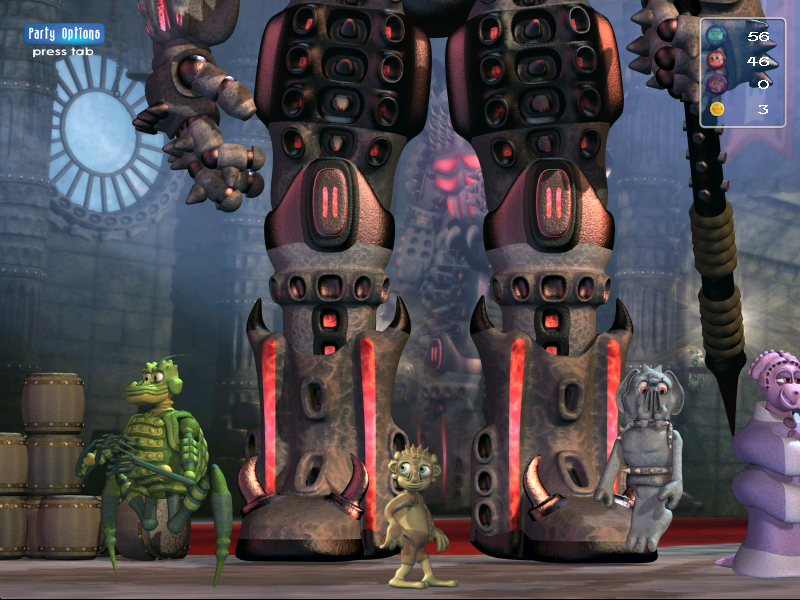
Zeboyd Games are best known for Cthulhu Saves The World, a parody of old-school Japanese-style RPGs. The game was very well received by the gaming press, and made headlines when the PC release made them more money in one week than they’d made in over a year and a half on X-box Live Indie Games. Readers of this blog may have noticed that I prefer to play PC games, and a major reason for that is the openness of the platform that allows indie developers like Zeboyd to be successful. Readers of this blog may also have noticed that I enjoy the occasional old-school Japanese-style RPG, such as Master of the Wind. So, naturally, I picked up a copy of Cthulhu Saves The World.

Then, I discovered that the PC release also includes Zeboyd’s earlier title, Breath Of Death VII: The Beginning. Being rather picky about playing things in the right order, I decided to try it first.

History Lessons: No One Lives Forever (part 2)

If you haven’t read it yet, you’ll probably want to read through part one before continuing.

At long last, I have finished No One Lives Forever. This took a while partly because I was busy but partly because the game is even longer than I suspected. I’m happy to report that despite the length, the quality of writing that I praised in part one never really faltered. There was one character I was unimpressed with, and a few dud jokes, but overall No One Lives Forever remained a tightly-written and thoroughly entertaining game. Most importantly, it handled the theme of sexism elegantly, without becoming overly preachy or melodramatic. Given the problems that most games have with female characters, this was a relief. Actually, it was more than a relief, because I now have a game I can point to as evidence for how to do it right. It’s not perfect — Cate’s wardrobe is a little worrying for most of the game — but in terms of the writing at least, it’s miles ahead of the norm for games at the moment.

I’m not worried though. The demand for better female characters (and indeed better characters in general) will continue to grow, and games as a whole will improve in response. But, despite holding up No One Lives Forever as an example to aspire to, new games will have to go about things differently. You see, I wasn’t entirely accurate earlier — the writing in No One Lives Forever isn’t great despite the game’s length, it’s great because of it.

Roguelike Highlights: POWDER

If you haven’t already, you may wish to read my Introduction to Roguelikes. Previous Roguelike Highlights can be found here.

I’ve been meaning to check out POWDER for some time, having heard good things from many sources, including comments on this blog. Originally released by Jeff Lait for the Gameboy Advance and Nintendo DS, POWDER has since been ported to Windows, Linux, Max OSX, Wii, Playstation Portable (although that’s an old version), iPhone and even GP2X. With the most recent version (release 117) arriving in December 2011, it seems that POWDER is still very much alive. Which is good, because in my time with it I’ve been quite impressed. Given its origins on handheld devices, I was expecting something fairly basic, but POWDER is actually a very deep and nuanced game that draws on some of the best elements of other roguelikes to create its own unique feel.

It certainly made me feel silly for being prejudiced against handheld games.

Indie Time: You Have To Win The Game

I’ve been rather busy, and can only find time for shorter posts. Fortunately, a short post is perfect for You Have To Win the Game. Released for free just a couple of months ago by J. Kyle Pittman (who spends his days working for Gearbox), You Have To Win the Game is a clear homage to games of yore, complete with a 4-color palette and a cool effect that simulates the curved surface of an old cathode ray tube monitor. The gameplay is that of a traditional exploration platformer, with players guiding the protagonist through a variety of screens collecting items and dodging enemies. Fans of classic games from the 1980s will certainly get a nostalgic kick out of it.

But I think the appeal of You Have To Win the Game is wider than that. It manages to capture much of what made those old games interesting in a way that new players can appreciate. As I explored the caverns of You Have To Win the Game I felt the same sense of wonder I once felt when playing Another World, where there was no telling what each new screen would hold. Modern games, for all their advances, often fail to capture that feeling, which was so common in the early days. Later, as I began to get my bearings, I felt a particular satisfaction in discovering just how all the pieces of the world fit together. It wasn’t simply mapping out the environment, it was seeing the way all the parts formed a cohesive whole; the same thing greatly impressed me when I played Might and Magic: Book One. The game centers on this strong world design, requiring the player to pay close attention to the environment in order to work out how to win.

Sure, I’m an older player who certainly feels nostalgia for classic games, but I think that anyone could appreciate these aspects of You Have To Win the Game. If you’ve ever been interested in why so many people pine for the games of their youth, give You Have To Win the Game a try, and it might help you understand. You can download the game for free from the author’s site.

Demo Time: Intrusion 2

Just after taking a second look at the Skyjacker demo, another demo came to my attention. This one is for Intrusion 2, an indie action platformer, with the focus on the “action” half. I mean, just look at this trailer. Intrigued, I gave the demo a spin, and I can confirm that the action is indeed completely ridiculous. I got to drop huge boulders on enemies, knock down guard towers by blowing up their supports, ride a giant wolf while shooting at flying squid robots (pictured above), and deal with an over-the-top, multi-stage boss fight that made most action movies look tame.

In short, it won me over, and I’ll be grabbing the full game, currently going for $10. But since it will end up in my ridiculously large game queue, to be played at some indefinite time in the future, I figured I’d call your attention to it now. The official site has the download link for the demo as well as the purchase link if you decide to buy.

Oh, and in case you are wondering, the “2” does in fact mean that it is the sequel to the original Intrusion, which was a free flash game. You can find it on flash portals like Kongregate if you’re interested.

Demo Time: Updated Skyjacker Demo

Skyjacker is one of many game projects seeking funding through Kickstarter. Unlike most, it actually has a playable demo, which I tried out a while back. Well, since then the project has raised nearly $93,000 out of their target of $200,000, but the bad news is that there’s only 10 days left in the campaign.

I’d really like to see Skyjacker succeed. It’s a space combat sim in the vein of classics like Freespace 2, but with a cool demolition system that lets player blow off bits of enemy ships and then salvage them to use themselves. Plus, with the demo the team has proven that they have the technical chops to deliver on their promises. And now, the team has updated the demo, mostly to include smarter enemy AI that will actually challenge the player. I took it for another spin, and it’s still quite fun, although I miss the “lead reticle” from Freespace that makes it easier to aim at enemy fighters at longer distances (EDIT: apparently this is already planned to be added to the final game). But it’s still pre-alpha gameplay; fixing these things is exactly what the Kickstarter campaign is for. If it sounds like something you’d be interested in, I urge you to check it out and consider donating to the campaign. Also take a look at their awesome fleet videos… they’ve got some really excellent ship designs in there.

Other Kickstarter projects have managed to pull through in the final days, but it requires getting the word out to people who might not know about the project. So take a look, and if you know others who might be interested, tell them about it.

Some quick technical notes about the demo and some more screenshots are below.

History Lessons: No One Lives Forever (part 1)

It’s been a while since I wrote a History Lesson post. You may wish to read my introduction if you haven’t already, and previous History Lesson posts can be found here. This is also the first History Lesson post that I’m writing as I play, rather than after the fact.

Having decided to take a break from Skyrim, I figured I should change gears. Instead of a modern game set in a medieval fantasy world, how about an older game set in the modern world? It seemed like the perfect time to try No One Lives Forever, a game I’ve been meaning to play for a long time. No One Lives Forever was released in 2000 by Monolith, the same studio behind Shogo: Mobile Armor Division (which was the subject of a guest post on this very blog), and it is set in 1967. Inspired equally by James Bond and Austin Powers, it tells the story of ’60s superspy Cate Archer, an operative in the British branch of the international intelligence agency UNITY. While ostensibly a first-person shooter, No One Lives Forever is known more for its implementation of stealth gameplay and for its variety of imaginative set pieces. It’s one of those games that many people hear about but few have played, touted as a classic that never quite reached the status it should have.

It’s also one of the rare games that feature a female protagonist. Let’s talk about that for a second.

Spelunky Released Today

Do you have an Xbox 360? Do you like to play games on it? Then you should probably go buy Spelunky immediately. Why, you ask? Well, the original, free PC version of Spelunky is absolutely brilliant, and this new version for Xbox looks like it’s improved in nearly every way. You can read my thoughts on the original game here, if you haven’t already. It’s probably the best free game I’ve ever played, with superb use of procedural generation to create a new adventure every time.

But what if, like me, you don’t have an Xbox? Have no fear! Not only is the original free PC version still available, but creator Derek Yu has stated that a PC port of the fancy new version is very likely in the future. I’ll be sure to let you know if/when it sees a release, but in the meantime, go give the original a play if you haven’t yet. You won’t regret it.

Indie Time: Iffermoon

A while back I posted about The Desolate Room, a game that never quite grabbed me. I’ve argued before that bad games can still be worth playing if they’re interesting enough, and there were in fact some interesting mechanics at the hart of The Desolate Room, but the game’s flaws outweighed these for me. I was left, however, with an interest in checking out the newer offerings from ScottGames, like the fairly recent sequel, The Desolate Hope. But rather than jump right to their most recent release, I decided to go through the ScottGames catalog in order, which meant starting with their next game, Iffermoon.

Iffermoon, like The Desolate Room, could be classified as a Japanese-style role-playing game due to its party-based, separate-screen battle system full of charge bars and special abilities. But that’s pretty much where the similarities end. Outside of combat, the player guides Silence, the young protagonist, through the various locales of the planet of Dinostria in side-scrolling fashion, stopping to chat with the diverse inhabitants and collecting various items along the way. There’s no real platforming; the side-view is merely the method for traveling around, and acts as a showcase for the strikingly imaginative and beautiful locations as well as some really fantastic character designs for the people you will meet. These, as well as the rather unorthodox story, were the main draws for me.

The Name Game

I’m currently playing several games but I’m not ready to write about any of them yet. But I feel I should post something. So I’m posting this.

It’s no secret that video games often have pretty bad names. Case in point: the new Medal of Honor game is officially called Medal of Honor: Warfighter. To be fair, this is the fourteenth Medal of Honor game, so coming up with new names must be getting a little tough. But still — Warfighter? Surely someone could have come up with a better subtitle than that?

Rather than simply complain about it, I decided I’d offer some alternative titles. It should go without saying that I’m merely making fun of the name of a video game and mean no disrespect to the actual Medal of Honor from which it takes its title. Here we go:

Medal of Honor: Honor Guard
Medal of Honor: Honorable Mention
Medal of Honor: For Blood and Honor
Medal of Honor: Honor Thy Father
Medal of Honor: Mo Medals Mo Honor
Medal of Honor: 13 Medals Weren’t Enough
Medal of Honor: Honor Bound
Medal of Honor: Honor This
14 Medal 14 Honor
Medal of Honor: The Honor Is Literally Everywhere
Medal of Honor: You Can’t Handle The Honor
Medal of Honor: Even More Honorable Than The Last Game

Click past the jump for even more names.

Page 27 of 34

Powered by WordPress & Theme by Anders Norén