Game-related ramblings.

Author: waltorious Page 18 of 34

Roguelike Updates: Let It Whip

As always, you can click on images to view larger versions.

It’s been a long time since my last Roguelike Updates post. Actually it’s been a while since I posted anything. I am running behind.

The biggest recent roguelike news (technically roguelike-like news) is that The Binding of Isaac: Rebirth, a remake/expansion of The Binding of Isaac, has been released. But I haven’t played it yet. I haven’t even bought it yet. That is how behind I am. What I have played, however, is the latest version of Brogue (v.1.7.4), which adds many things, including whips.

Six-Sided Sadism: Super Hexagon

You can click on images for even bigger hexagons.

When I started this blog over three years ago, I hadn’t intended to only write about PC games. I figured I’d throw a few board games in there, along with any other interesting games I came across. But PC games are what I spend most of my time playing, so I never got around to writing about anything else. It’s high time to break that trend. Recently I’ve been playing games on my phone a lot more often, so I figured I’d highlight the first game I ever bought for it: Super Hexagon by Terry Cavanagh.

It’s About Windowsills: Windosill

As always, you can click on images to view larger versions.

I wonder if the experience of playing with toys on a windowsill is a universal one. Windowsills hold a particular appeal for this purpose. The wide, shallow space evokes a stage, upon which any manner of drama or comedy can be enacted — or indeed, for those of the right age, a side-scrolling video game, offering action or calm exploration depending on one’s mood. And the window itself is (literally) a portal, through which the imagination can conjure anything.

But windowsills are hardly ubiquitous. Not all homes have windows with sills, especially when considering architecture of the non-Western persuasion, and of course there are many people who are not lucky enough to enjoy their own home at all. Would the idea of playing on a windowsill then be foreign? And what about members of the youngest generation, who are growing up in a world of smartphones and other electronic devices, for whom play may take a very different form? Would they still want to play with actual, physical toys, on a physical windowsill? Is there something innate in the windowsill’s appeal, that anyone would understand?

Windosill, by Vectorpark, is a game about playing with toys on windowsills.

A Bit Of The Old Ultraviolence: Hotline Miami

As always, you can click on images to see larger versions. But be warned that they depict some grisly violence this time.

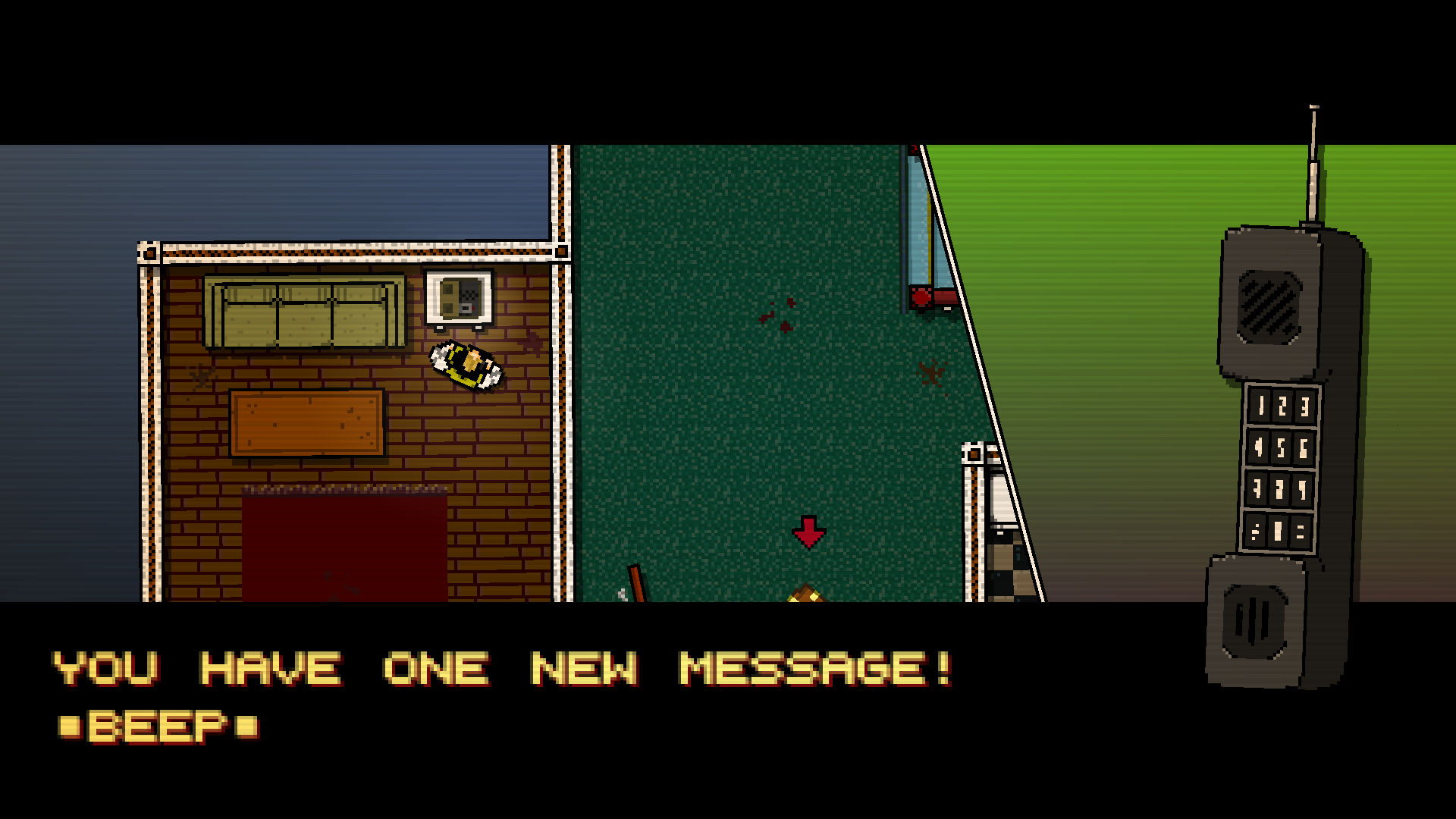
Hotline Miami made quite a splash when it was released two years ago. Critics loved its aesthetic, its pastel palette evoking the neon lighting of late ’80s Miami, its hard-hitting synth-heavy soundtrack sounding like what the late ’80s should have sounded like. To me, it was more notable as the first commercial game by Jonatan Söderström, better known as Cactus, who forms one half of developers Dennaton Games (the other half is Dennis Wedin, with whom I was not previously familiar). Cactus has a reputation for making strange, free games, something he’s been doing for longer than “indie games” have been things people knew about. But the hyper-violent tale of Hotline Miami seemed at odds with his earlier output, and honestly wasn’t that appealing to me. Eventually curiosity got the better of me, however, and I’m glad it did.

The Witcher Adventures: Merry Witchmas

I’m playing through the bonus Adventures included with The Witcher. Read about the earlier Adventures, along with an introduction to the game, here. Also remember that you can click on images to view larger versions.

Well, this is it: the last Adventure included with The Witcher. To be honest, it took much longer to play and write about these than I expected. But they offered a great opportunity to write extensively about a very interesting game, and I was often impressed with what the fan community had created.

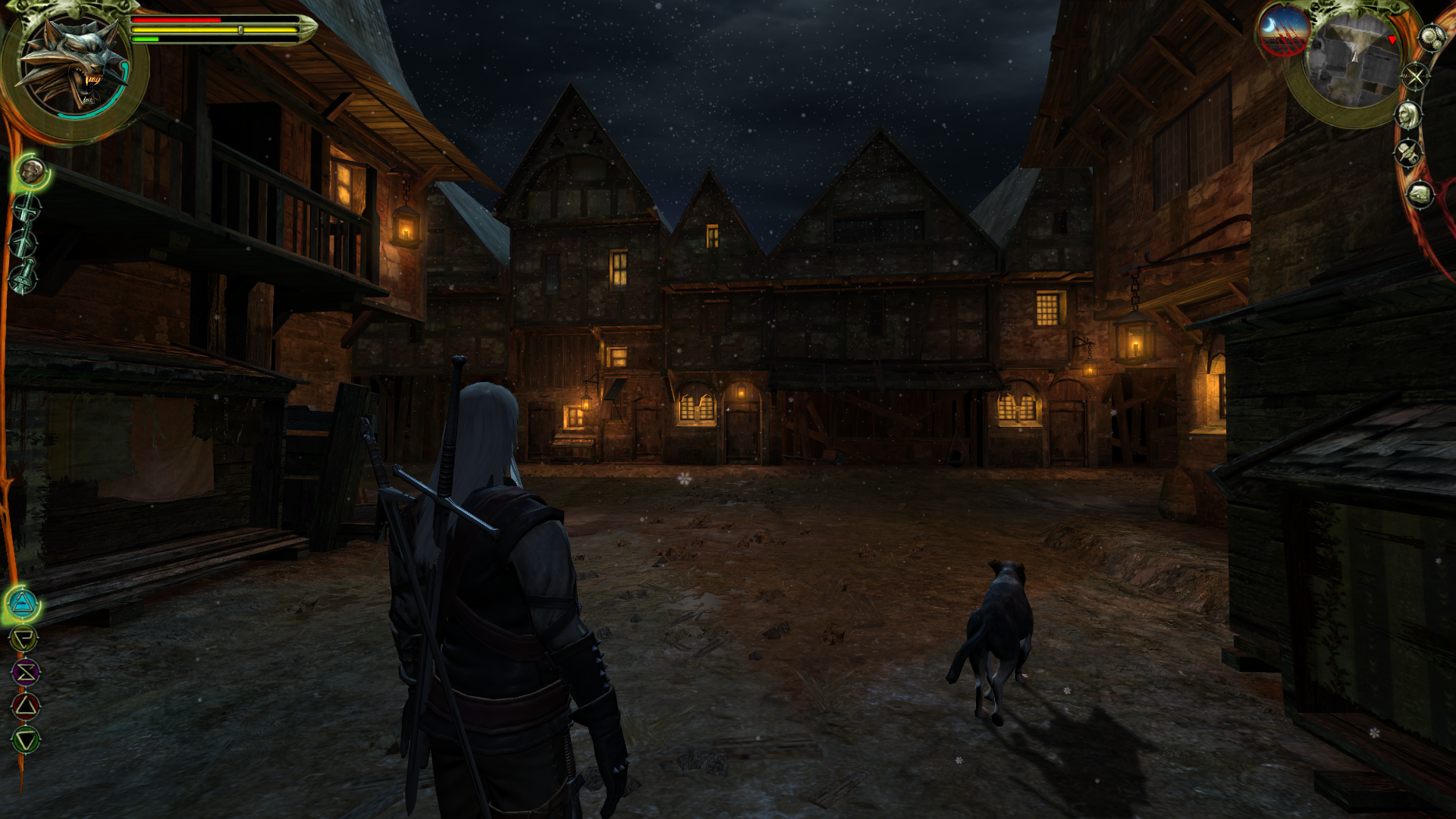
The final Adventure is called Merry Witchmas, and is also by Ifrit, the group responsible for The Wedding. After playing The Wedding I didn’t have very high hopes for this one, but it’s actually much better. Merry Witchmas takes us once again to Vizima’s Temple Quarter, but this time snow is falling as winter approaches. Geralt wants to make a little more money before retiring to Kaer Morhen for the winter, but gets more than he bargained for when he discovers it’s up to him to save (or destroy) the Witchmas holiday.

The Witcher Adventures: The Wedding

I’m playing through the bonus Adventures included with The Witcher. Read about the earlier Adventures, along with an introduction to the game, here. Also remember that you can click on images to view larger versions.

The next Adventure on the list is The Wedding, which was made by an entire team of modders known as Ifrit. The Wedding sets itself apart from the other adventures by having no combat whatsoever. In fact, it doesn’t have any of the myriad game mechanics showcased in the earlier Adventure Deceits, except for a few fistfights. It’s focused solely on conversations, aiming for a silly comedic tone.

Unfortunately, The Wedding also sets itself apart from the other Adventures by being terrible.

The Witcher Adventures: The Wraiths Of Quiet Hamlet

I’m playing through the bonus Adventures included with The Witcher. Read about the earlier Adventures, along with an introduction to the game, here. Also remember that you can click on images to view larger versions.

The next adventure on the list, The Wraiths of Quiet Hamlet, is by Krzysztof Wiśniowski and his brothers Adam and Jacek, and it earned an honorable mention in D’Jinni Adventure Editor Contest. Like the winner of that contest, Deceits, it repurposes the riverside village location from Chapter IV of the main game, and like Deceits it tells a tale of Geralt arriving in a small village and solving the locals’ problems. So I was surprised at just how different of an experience it is, by virtue of both its writing and its design.

“Gamers”

As usual, I’m a little late with this. Some truly awful events have occurred over the last couple of weeks that highlight the absolute worst of so-called “gamer” culture. A culture that is based on elitism, entitlement, misogyny, and hatred, and which has never truly represented those who love and play games. The people (actually, I might as well say “straight white men”) who adhere to this have falsely proclaimed themselves the “true gamers”, an idea which would have been ridiculous had the video game industry not courted and marketed to these very people for so long. They tend to react with violent outbursts of hate (anonymously, on the internet, of course, because they’re assholes) whenever it is suggested that a woman or anyone else who is not a straight white male might like to play or make games, especially if those games are not the kind of games these so-called “gamers” like.

In the last few weeks, these outbursts were directed at two women in particular. One, a game designer who had released a text game called Depression Quest which is conspicuously different from the standard AAA action games that these “gamers” so adore, was accused of having slept with a journalist in exchange for good reviews, and was therefore subjected to a barrage of online harrassment, including death threats and a whole heap of hate speech and baseless slander. No one harassed the male journalist, of course, because he’s a man, and he doesn’t make games about depression. Oh, and it turns out he probably never wrote a review of her game anyway, and the whole thing is complete nonsense. But no, the “gamers” decided the woman was guilty of some egregious offense, and proceeded to be completely and utterly awful.

The second woman has been harassed more or less constantly for the past two years because she dared to Kickstart and create a series of educational videos about sexism and misogyny in video games, which point out correctly and undeniably that there’s a whole lot of sexism and misogyny in video games. But her latest video (part 1, part 2) sparked the worst barrage of hate yet, up to and including some disturbingly specific death threats that caused her to leave her home out of fear for her safety and that of her family.

Yes, you read that right. These online harassers drove her from her home. This is not OK. This is reprehensible. This is shameful. And these are the people that the games industry courts. It has to stop.

The Witcher Adventures: Deceits

I’m playing through the bonus Adventures included with The Witcher. Read about the earlier Adventures, along with an introduction to the game, here. Also remember that you can click on images to view larger versions.

I’ve finished with the Adventures made by original developers CD Projekt RED. The next Adventure on the list, Deceits, is by Rafał “Magun” Bielicki, and was the winner of the D’Jinni Adventure Editor Contest. It came packaged with the 2011 v1.5 patch for the main game, and it’s pretty much what I envisioned before I started playing these Adventures: a short tale in which Geralt arrives in a village, offers to solve the villagers’ monster-related problems, and uncovers a few dark secrets along the way.

The Witcher Adventures: Side Effects

I’m playing through the bonus Adventures included with The Witcher. Read about the earlier Adventures, along with an introduction to the game, here. Also remember that you can click on images to view larger versions.

After The Price of Neutrality, the next Adventure on the list is Side Effects, also by original developers CD Projekt RED. It was released in 2008 along with the Enhanced Edition of the base game. Like The Price of Neutrality, Side Effects is fully voiced (and again, please use the original Polish voices) and is on par with the main game in terms of production quality. Unlike The Price of Neutrality, Side Effects is not focused on narrative, instead reveling in the pure mechanics of the game.

Page 18 of 34

Powered by WordPress & Theme by Anders Norén